Creating sustainable businesses: a quantitative analysis of Norfund’s exited projects

An essential part of Norfund’s mandate is to support the creation and expansion of viable and sustainable businesses, providing jobs and revenue streams in developing countries. The aim is to exit an investment when Norfund is no longer additional, so that others can take over. Capital can then be circulated into new businesses, increasing the impact of each krone allocated to Norfund through the aid budget. 

Norfund invests in robust businesses that will have a lasting impact on their country and community. At the same time, capital is needed to promote higher risk projects that might have a large impact if they succeed, but a larger probability of failure. To investigate delivery on the mandate, and balance of risk-taking, we conduct an analysis of Norfund’s exited companies by end 2025, 111 in total.

The analysis

The analysis from 2025 is the fourth of its kind, with previous analyses having been completed in 2015, 2019 and 2022.

A company remains operational if there are clear indications that activities continue at a reasonable level.

Company performance in job creation, financial indicators and other development impacts, tracked during holding period and 3 years post-exit. All financial numbers have been inflation adjusted to give a true picture of growth.

The data

The dataset consists of 111 exits in total, of which 47 have passed the 3-year post-exit threshold. The distribution across regions and departments largely mirrors that of Norfund’s current portfolio.
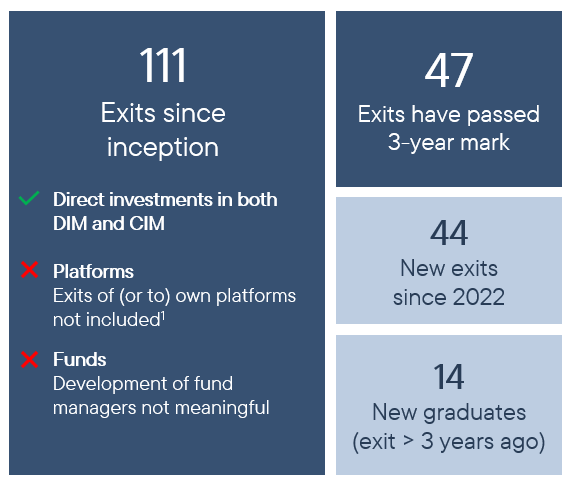
Note: Funds and platforms are not included in the analysis due to complexity, unclear exit classification, and small share of project count. 

Key results

1. Most investments remain operational, both during and after Norfund ownership

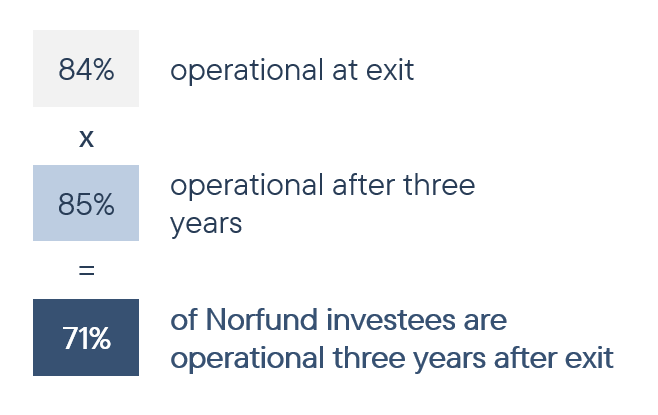
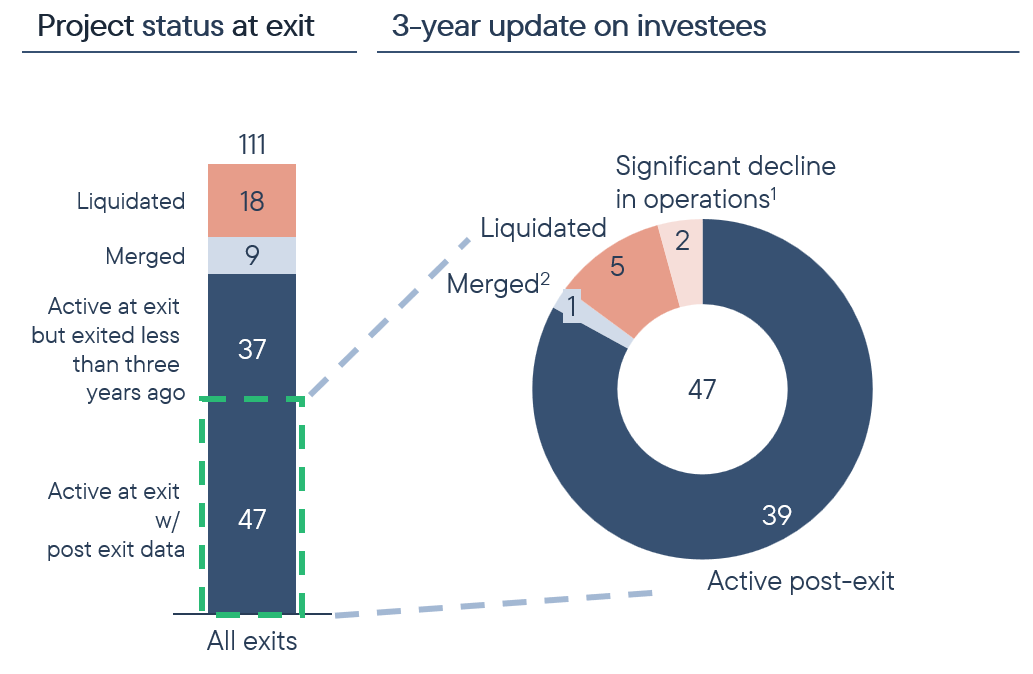
When Norfund exits, 84% of projects are operationally active.

Combining the operational rates seen during ownership and after exit indicate that 71% of all projects are operational three years after exit.
2. Investees exhibit growth in key impact indicators, both during holding and post-exit

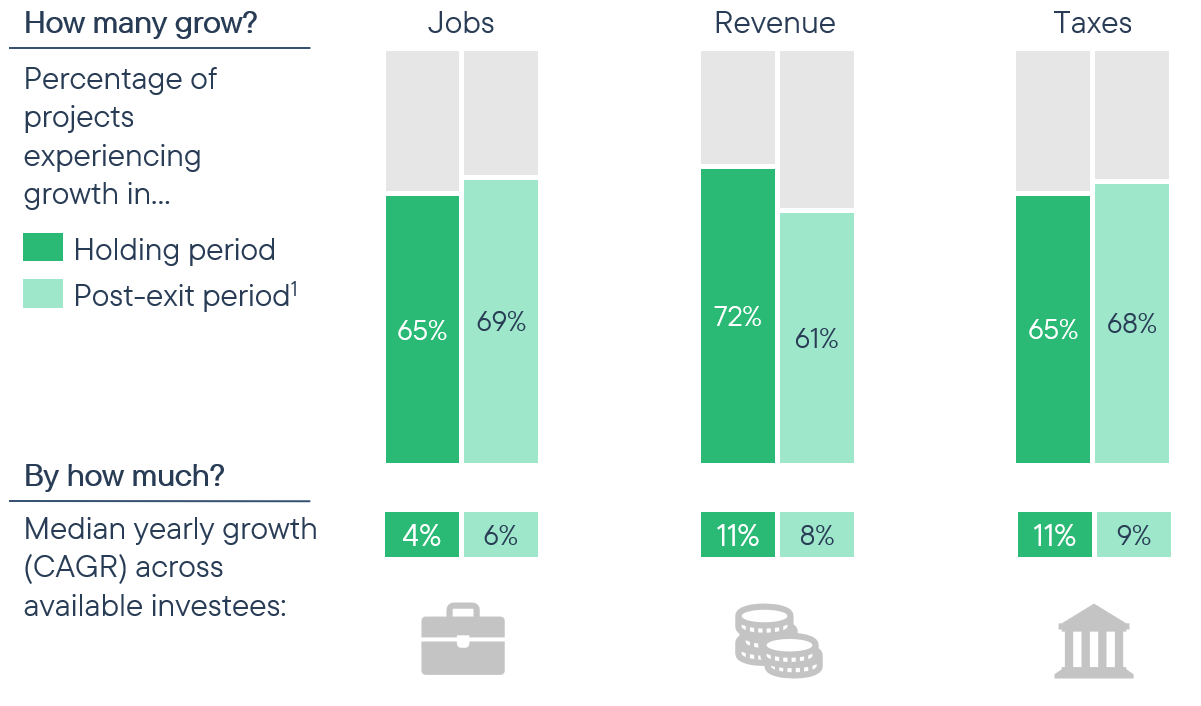
Three key indicators have been chosen to represent growth among Norfunds investees: Direct jobs shows how Norfunds investees contribute to work opportunities in local communities, revenue shows how Norfund investees deliver value creation, and total taxes paid represent the direct effect on local governments.

This analysis has added inflation adjustments, achieving an even clearer picture of project trajectories.

Across all indicators, 60-70% of Norfund’s investees grow. Annualized growth during holding period is 4% for jobs, and in the double digits for both revenue and taxes. 

Projects also experience growth post-exit, aligning with our goal of achieving lasting and sustainable impact.
3. Rising number of exits

Exiting projects means that Norfund can reuse capital to fund other projects, leading to a higher impact. 
 
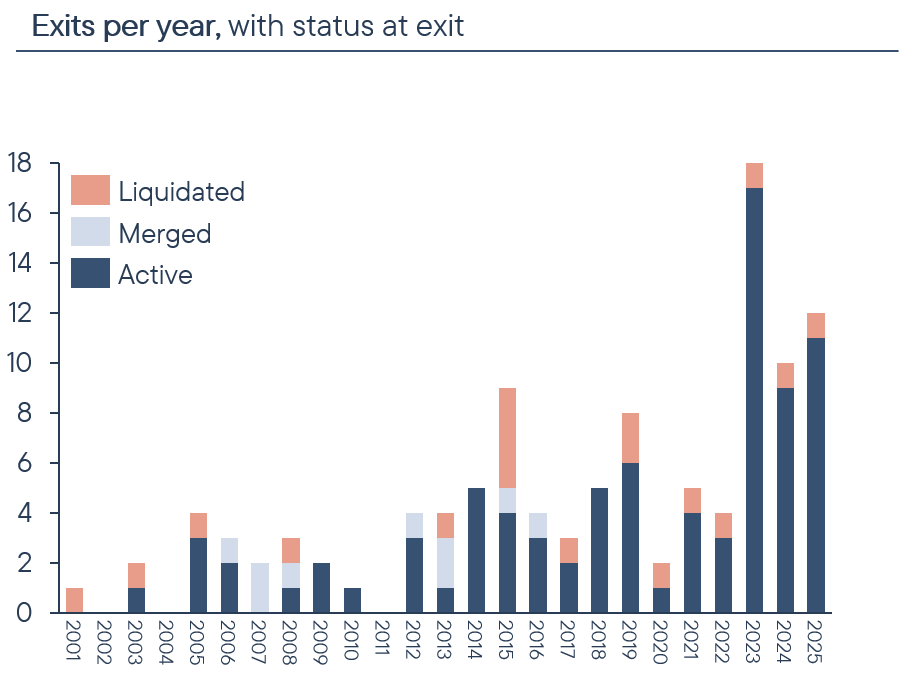
Exits have been a priority in later years, and average exits per year has increased: The last three years saw an average of 13 exits per year, while the ten year average is 7.

Since inception, liquidations as share of exits have fallen, suggesting an improved capability of choosing and developing projects or change in strategy.
Data limitations

The current analysis is undertaken primarily as a self-assessment and learning tool and has several data limitations. As such, the results are considered indicative, rather than conclusive.

There are plans to expand and improve on the dataset in the future to address these limitations and over time make findings more robust. Limitations include:

  • Limited number of observations
  • Data quality limitations

Norfund divests remaining stake in SN Power

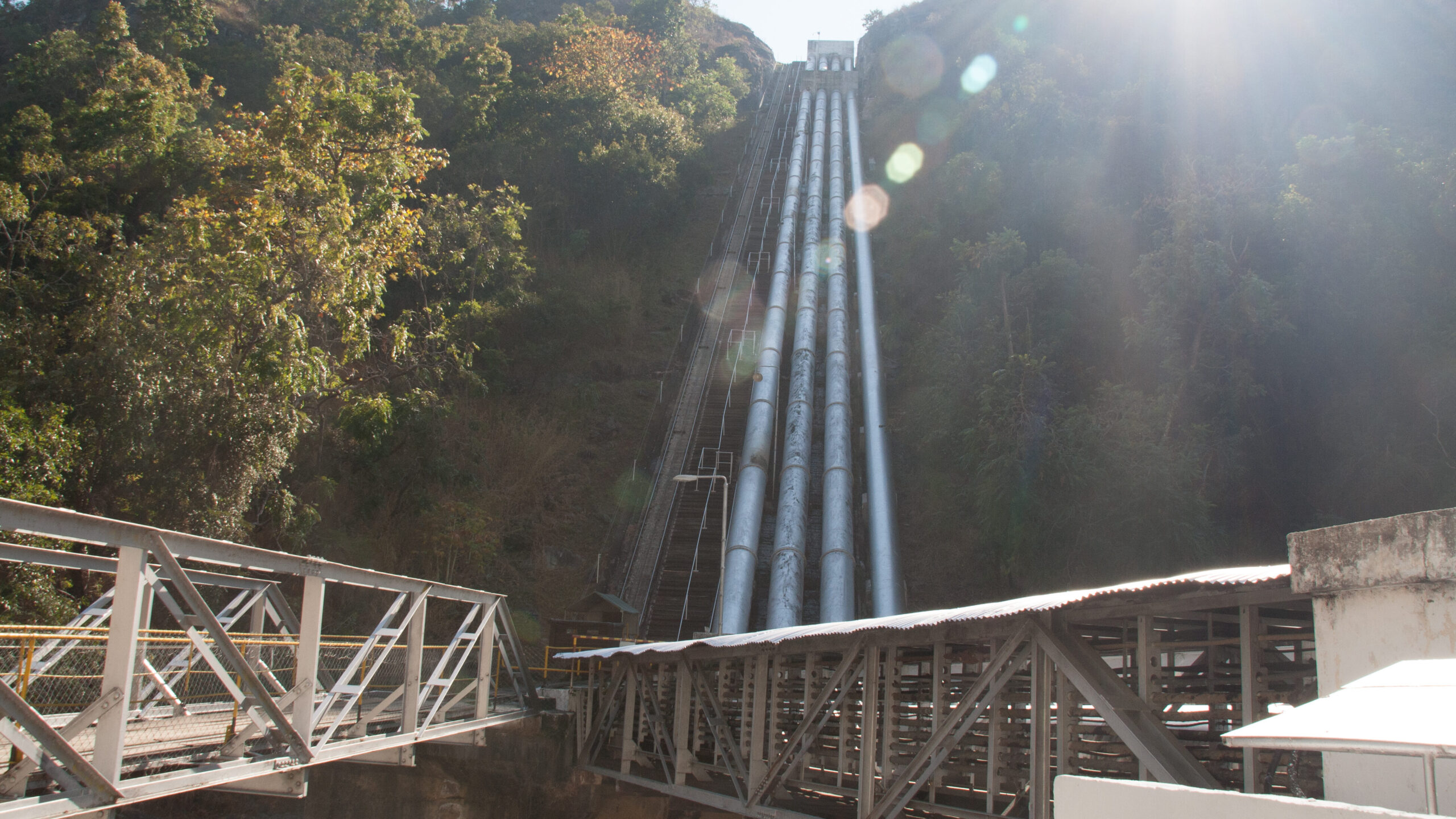
Norfund is selling its hydropower assets in Africa to Savannah Energy, completing its exit from what was formerly SN Power, built in partnership with Statkraft. 

Photo: SN Power Africa. Lunsemfwa, Zambia.

“When we can sell with solid returns to private actors and mobilise capital for new investments, we contribute even more effectively to development,” says Øystein Øyehaug, Investment Director at Norfund.

Norfund is selling its 50.1% ownership in Klinchenberg, which was established to manage Norfund’s hydropower holdings in Africa after other parts of SN Power were sold in 2021. The company holds stakes in three hydropower projects: Bujagali in Uganda, Mpatamanga in Malawi, and Ruzizi III – a collaboration between Rwanda, Burundi, and the Democratic Republic of Congo. 

“These projects help ensure stable power supply in Uganda, support the development of Malawi’s largest power plant, and strengthen regional cooperation that has been a key part of peacebuilding in a turbulent region,” says Øyehaug. 

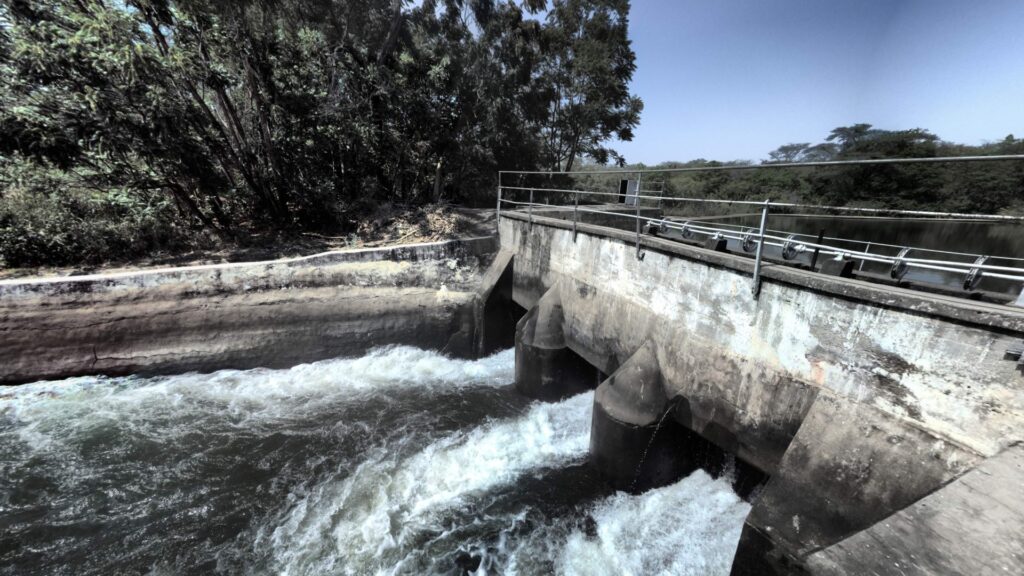
Photo: Martin Lacey, WestGlen Consult

Long-term and profitable commitment to hydropower

After building SN Power into a leading hydropower company in developing countries, Norfund sold the company to Scatec for NOK 10.9 billion in 2020. Norfund retained ownership of SN Power’s facilities in Panama and Zambia, and 49% of remaining projects in Africa. 

“Through the development and sale of these projects, we’ve helped mobilize significant private capital in a region that rarely succeeds in attracting private investment,” says Øyehaug. 

The facilities in Zambia were sold earlier this year to Globeleq. In 2022, half of Klinchenberg was sold to British International Investment (BII). Scatec’s share in the African projects formerly part of SN Power was sold earlier this year to TotalEnergies

“The annual return of 21% in USD from these projects shows that it is possible to develop profitable energy projects even in some of the world’s most challenging markets. The capital we free up will be reinvested in new projects that contribute to sustainable growth,” says Øyehaug. 

Exit from groundbreaking solar and battery project in South Africa 

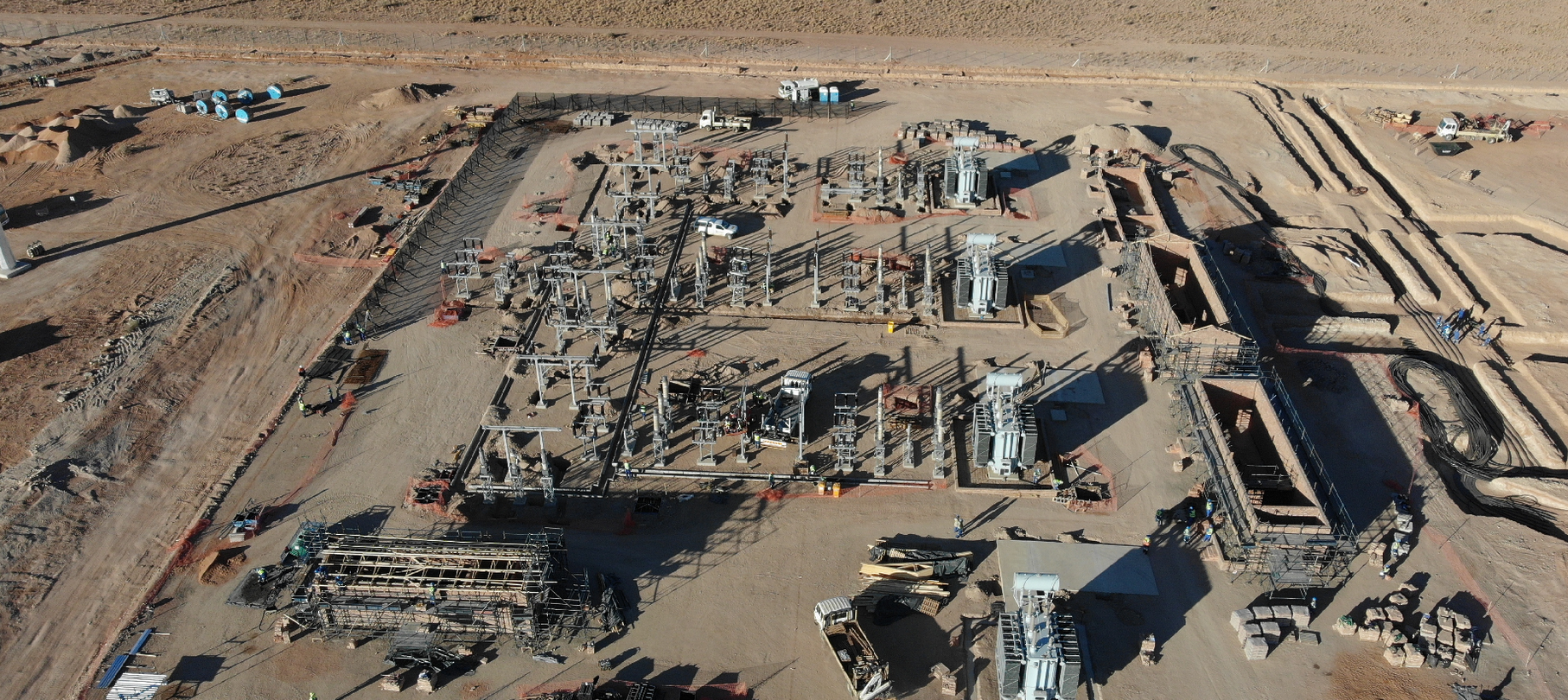
The Climate Investment Fund, managed by Norfund, has completed a responsible exit from the Kenhardt project — South Africa’s first large-scale hybrid solar and battery facility, built by Norwegian company Scatec. 

Photo: H1

“Through early-stage financing, we mobilized private capital and helped make this groundbreaking project by Scatec a reality. Now that private investors are taking over our share as well, allowing us to reinvest in new projects, our contribution gains an additional multiplier effect,” says Bjørnar Baugerud, Head of the Climate Investment Fund at Norfund. 

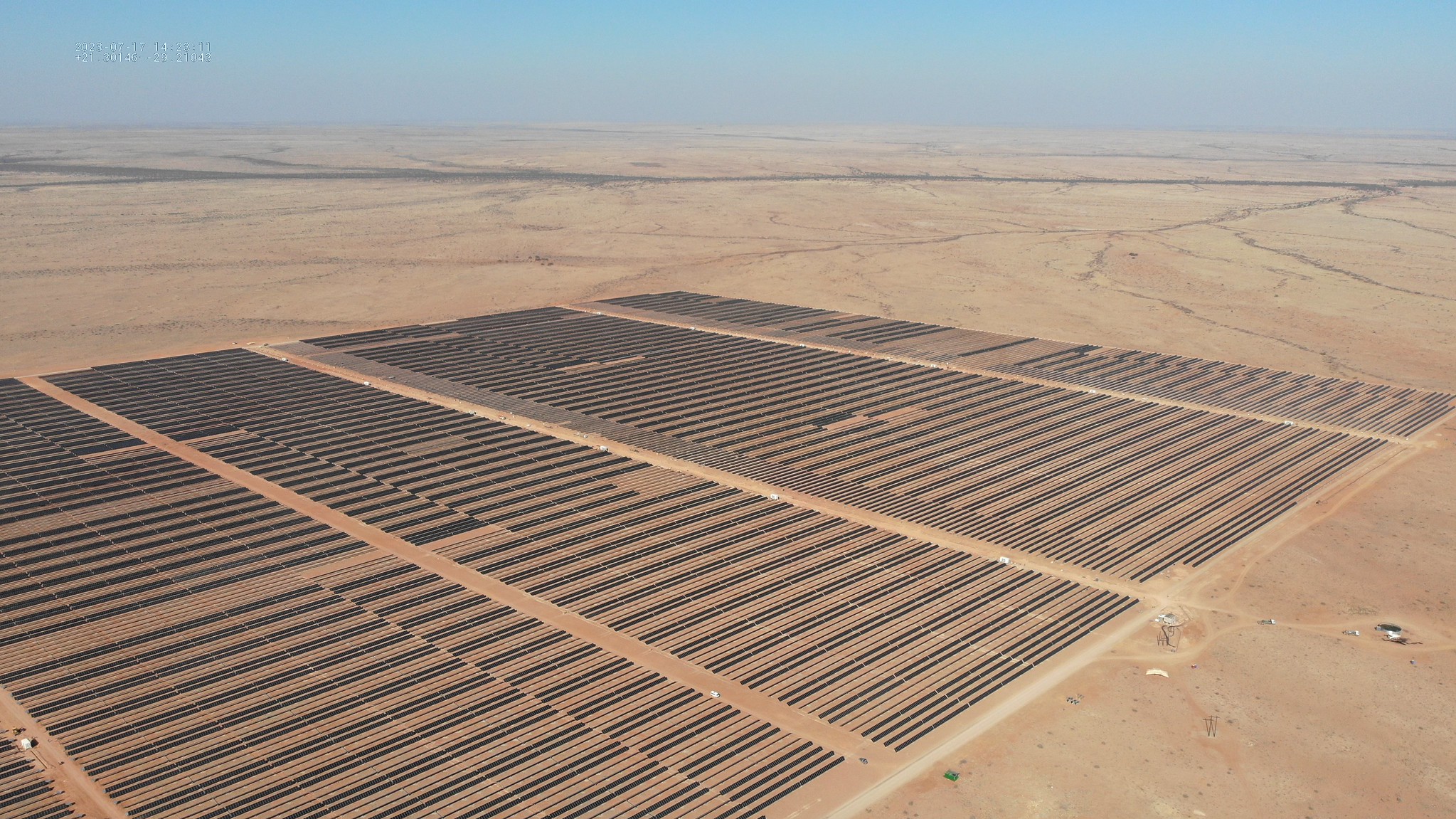
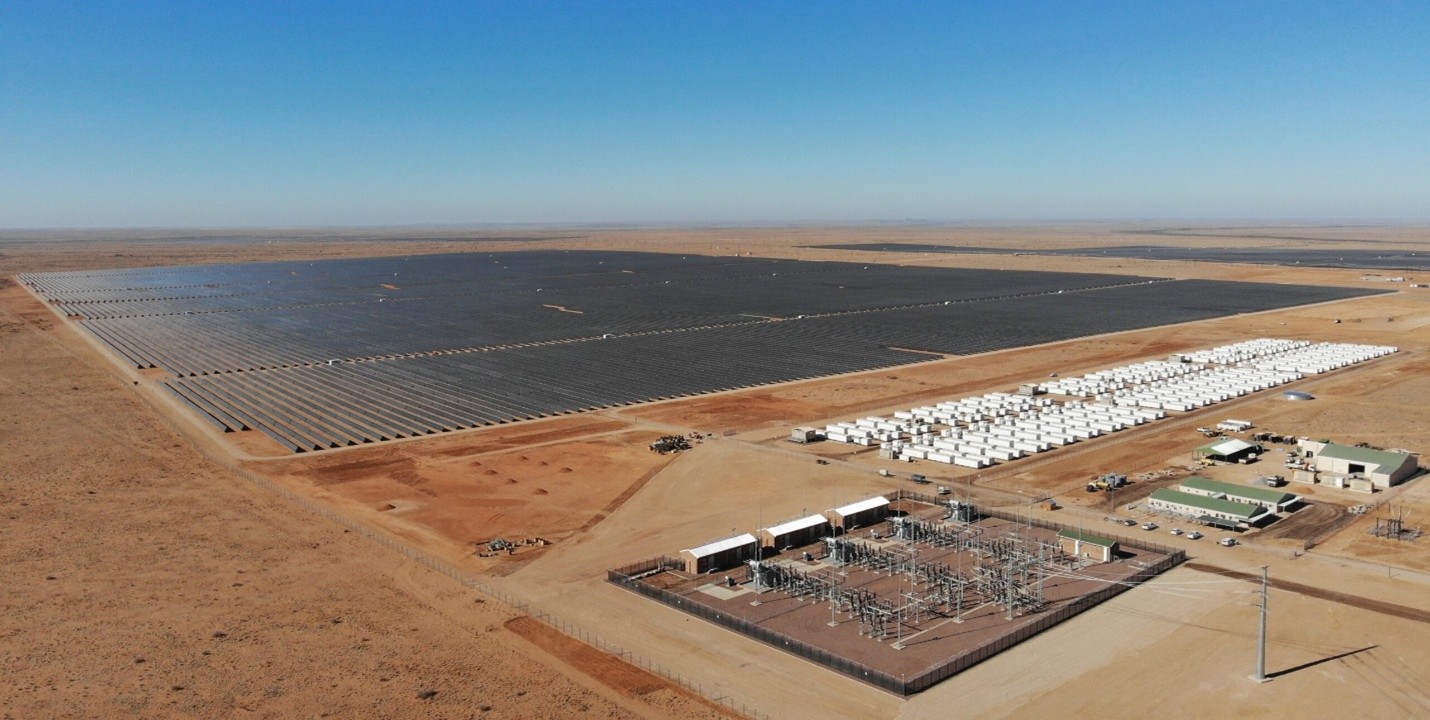
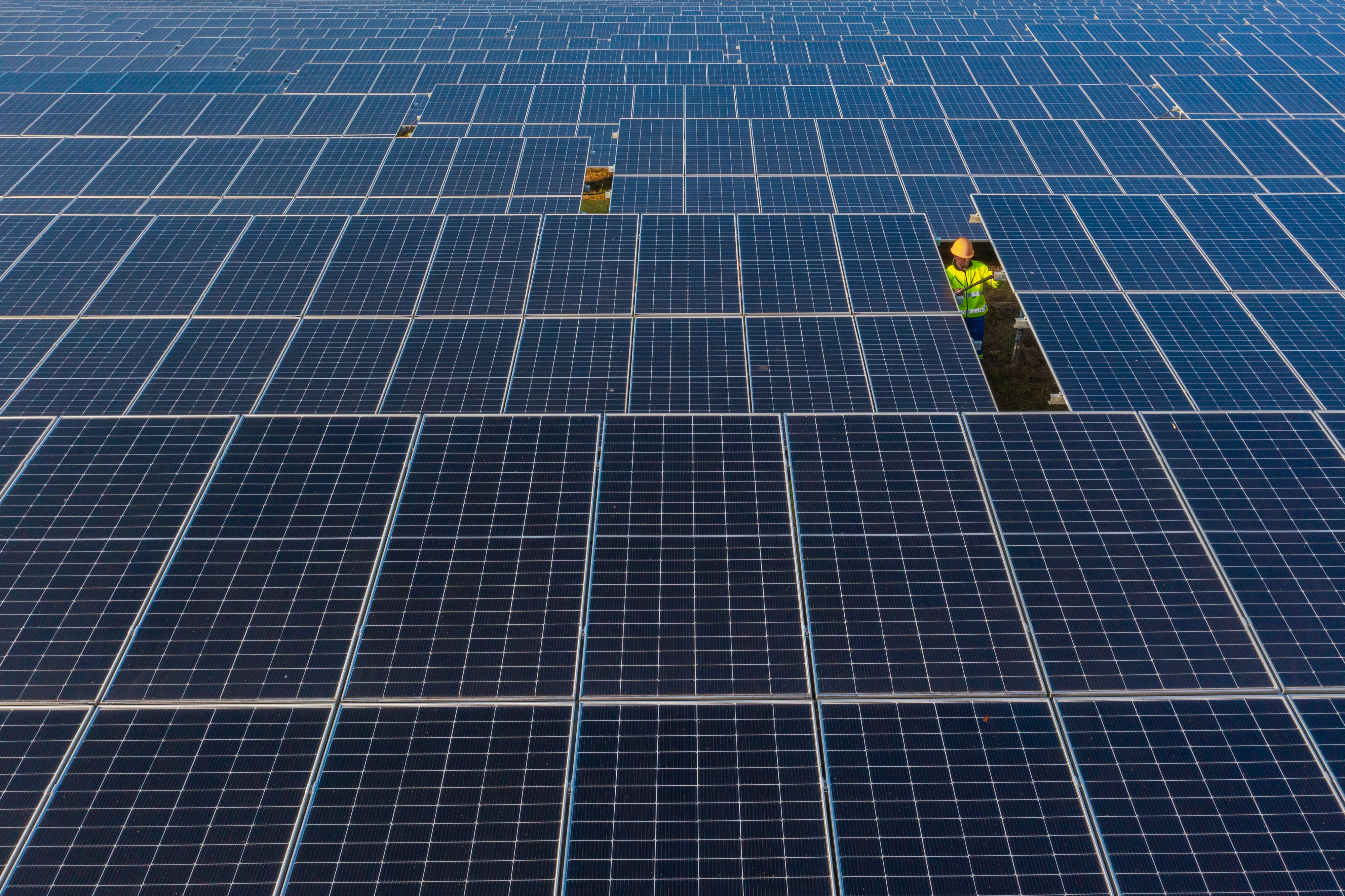
Kenhardt, developed by Scatec and H1 Capital, is among the world’s largest hybrid plants, with 540 MW of solar power and 225 MW / 1,140 MWh of battery storage. The project was awarded under South Africa’s RMI4P program—a technology-neutral scheme designed to rapidly address the country’s acute power shortages and reduce reliance on costly diesel-based backup plants. Distinguished as the only fully renewable solution among the contenders, the Kenhardt project surpassed fossil-fueled alternatives in the competitive bidding process, by combining solar power with battery storage to deliver stable electricity between 05:00 and 21:30. 

In a country where most energy is coal-based, the project helps avoid 900,000 tons of CO₂ annually — equivalent to the emissions from 460,000 Norwegian fossil-fueled cars. 

Photo: Scatec

South African bank takes over financing 

H1 Holdings has now partnered with Standard Bank to secure long-term equity financing of R1.921 billion, enabling a responsible exit for the original investors—Norfund, British International Investment (BII), and the Industrial Development Corporation (IDC). 

“The 2022 investment was crucial to meet the local ownership requirement in the Kenhardt project, but it also illustrates how climate finance can play a catalytic role in the early stages of pioneering energy projects,”

Bjørnar baugerud, head of the climate investment fund

Access to capital on competitive terms is essential for realizing renewable projects in emerging economies, where the cost of capital is significantly higher than in developed countries. This makes it particularly challenging to replace planned and existing coal-fired power plants with solar and wind projects, which require high upfront investments. 

In South Africa, the power sector has faced serious challenges related to aging infrastructure, economic instability, and frequent power outages—with major consequences for both businesses and households. 

Photo: Norfund

Case study highlights local job creation and environmental and social standards

Alongside the exit, Norfund is publishing a case study providing more details about the project. The study outlines how the project was assessed according to both local requirements and IFC’s international guidelines to ensure high environmental and social standards. An independent assessment was conducted to identify environmental and social risks and to validate Scatec’s risk management systems. This was supplemented by government-mandated studies and expert analyses in areas such as cultural heritage, human rights, geohydrology, traffic, and biodiversity, resulting in an action plan with follow-up and monitoring. 

Read the case study here

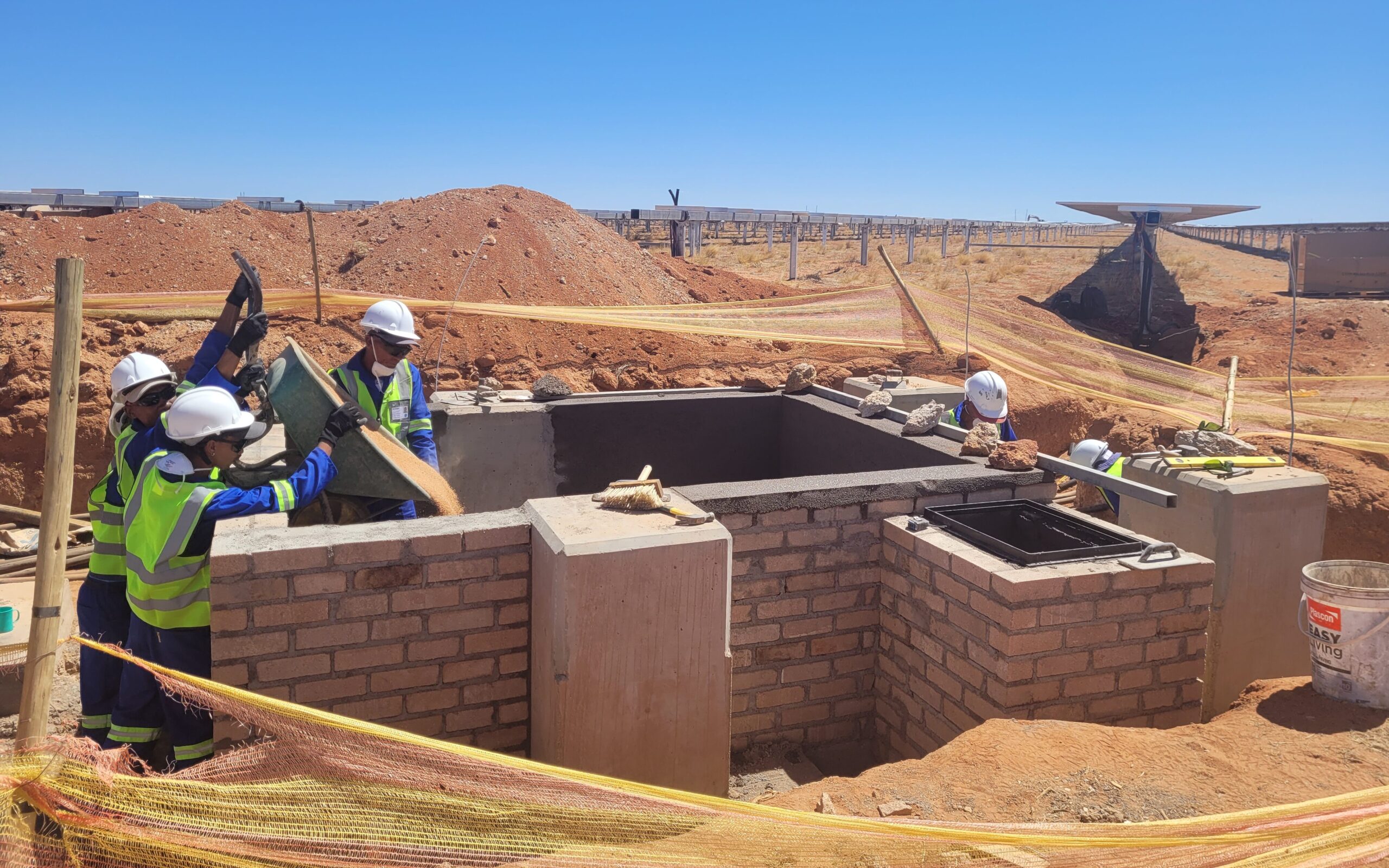
“In a region marked by high unemployment and social challenges, the project has contributed to local value creation through hiring workers from nearby areas, sourcing goods and services from various local suppliers, and social initiatives such as food distribution and water supply. The construction sector is traditionally male-dominated, but the Kenhardt project stood out with a high proportion of female workers,” says Karoline Teien Blystad, Director of Climate and Impact at Norfund. 

During the construction phase, extensive measures were implemented to reduce traffic-related accidents and safeguard worker health and safety, including driver training, GPS monitoring of vehicles, and strict speed limits. The project also conducted a risk assessment related to gender-based violence and harassment (GBVH), and implemented training and awareness efforts in the local community and among employees. Biodiversity was protected through careful handling of vulnerable plant species, and water needs were met without burdening groundwater resources. 

Photo: H1

Climate Investment Fund makes its first exit 

The Climate Investment Fund is selling its stake in a power line project in India, marking its first exit since its establishment in 2022.

quote-start
As climate change intensifies, smallholder farmers are caught in a vicious cycle of low productivity and environmental degradation. The Climate Smart Fund offers a promising model that addresses poverty alleviation alongside climate mitigation and adaptation, equipping farmers with the tools they need to thrive sustainably.
Anne-Beate Tvinnereim
Development Minister of Norway
speaking from COP 29
quote-start
Konexa har en innovativ forretningsmodell, og vi er glade for å kunne bidra til Nigerias langsiktige sosiale og økonomiske utvikling med denne investeringen.
Birgit Edlefsen
Birgit Edlefsen
speaking from SVP, Norfund
>
quote-start
“By selling when we are no longer needed and recycling the capital, we achieve more climate impact,”
Bjørnar Baugerud
Head of the Climate Investment Fund

Managed by Norfund, the Climate Investment Fund was set up in 2022 to help avoid greenhouse gas emissions through profitable investments in renewable energy in developing countries with high emissions. Three years later, the fund is making its first exit from a project. 

Connected 2.5 GW of wind power in India 

In partnership with the Indian company ReNew Power, Norfund and Norway’s largest pension company KLP invested 900 million rupees (109 million NOK) in a power line project in the Koppal district of southern India in December 2022. The project was completed in October 2023.

“Through the investment, we have helped connect 2.5 GW of developed wind power to the national grid, enough to meet the needs of 7 million Indian households,” says Bjørnar Baugerud, head of the Climate Investment Fund at Norfund.

According to the Central Electricity Authority (CEA) in India, the country will need 170,000 kilometers of transmission lines and 47 GW of energy storage capacity (BESS) over the next eight years to phase in increased renewable power production.

Photo credit: Shruti Singh. Location: Uttar Pradesh, India.

Recycling with returns ensures efficient use of public capital

According to its mandate, the Climate Investment Fund is to “reinvest earned and freed-up funds from its investments.”

The project is now being sold to the Indian company Indigrid, with which Norfund also recently entered into a partnership for the development of new projects.

“As soon as we are no longer needed as an investor in a project, we will seek to sell to private entities so we can reuse the money and contribute more to avoiding emissions,” says Baugerud.