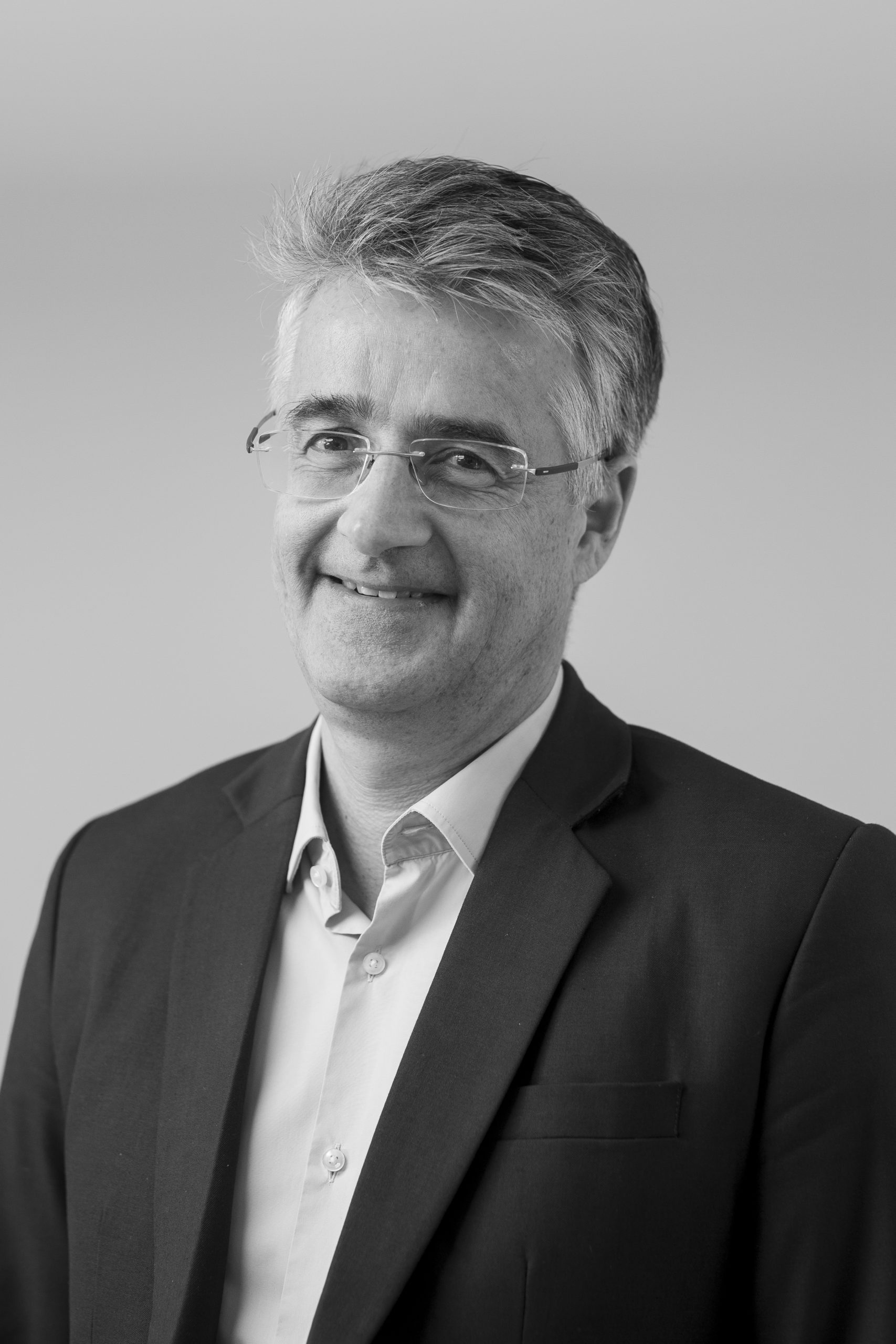
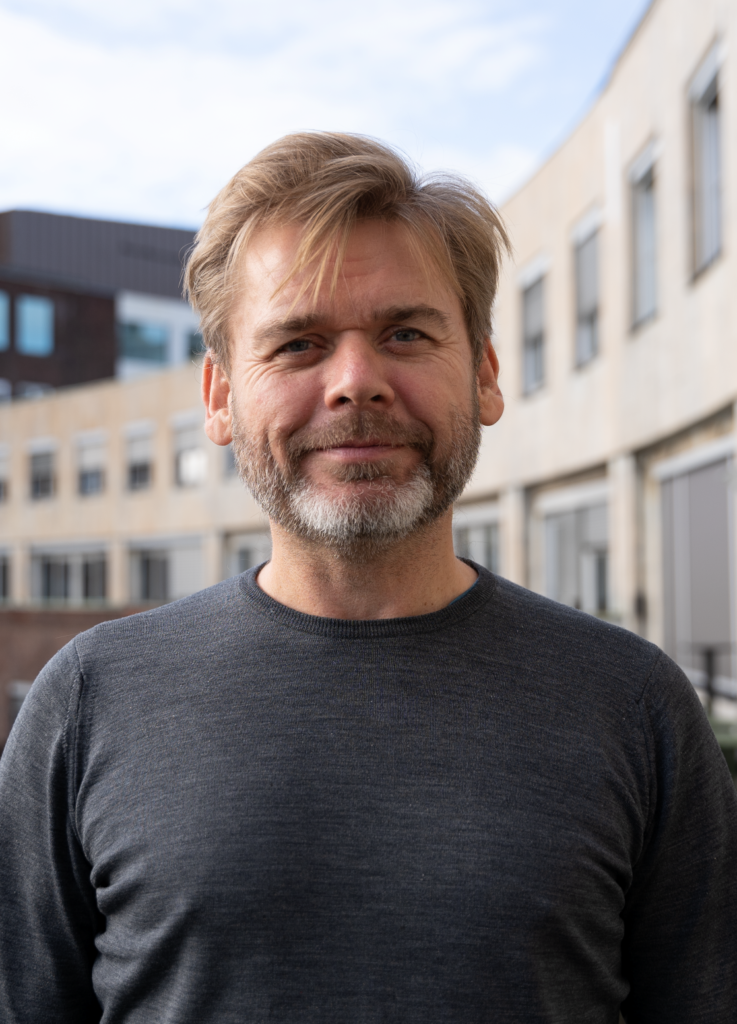
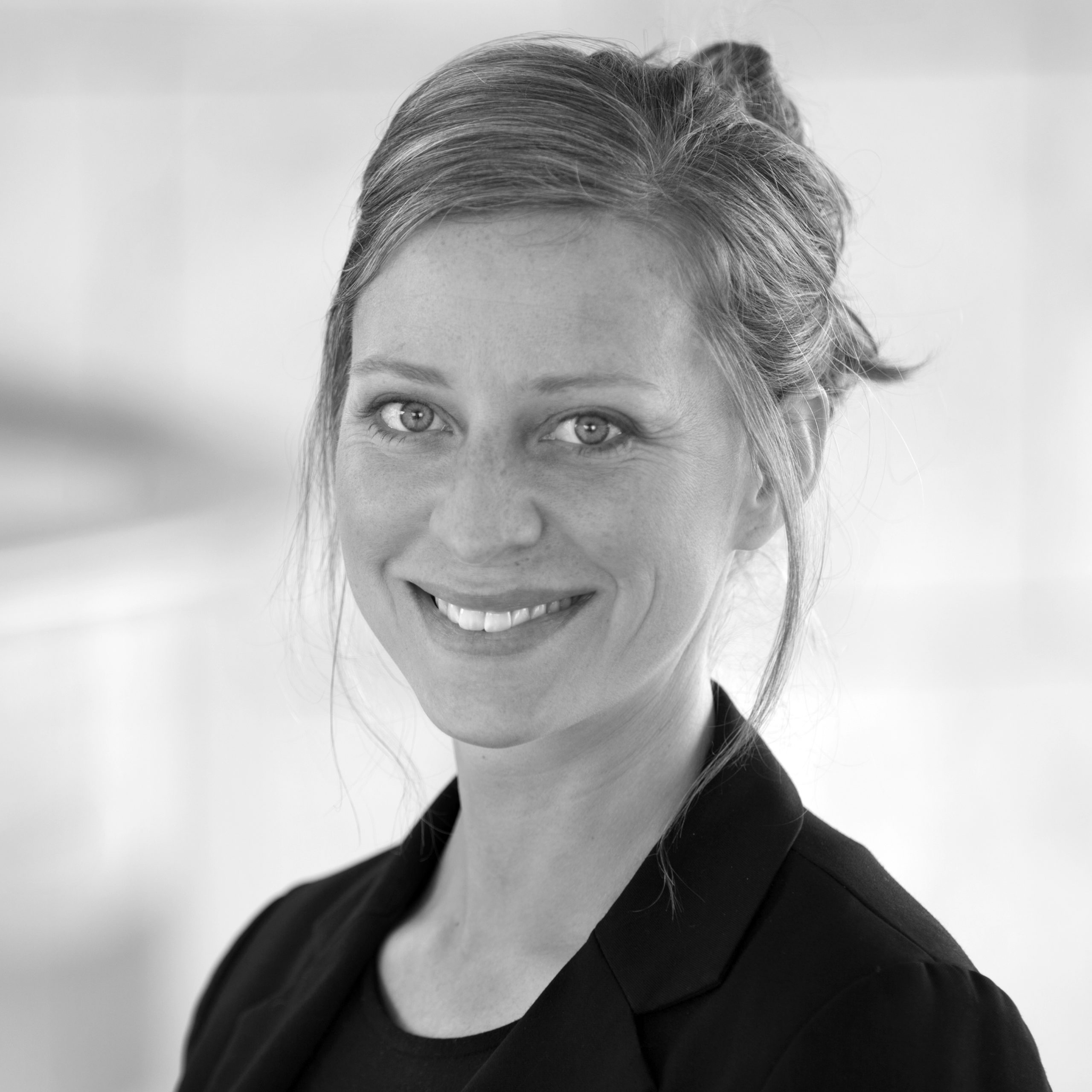
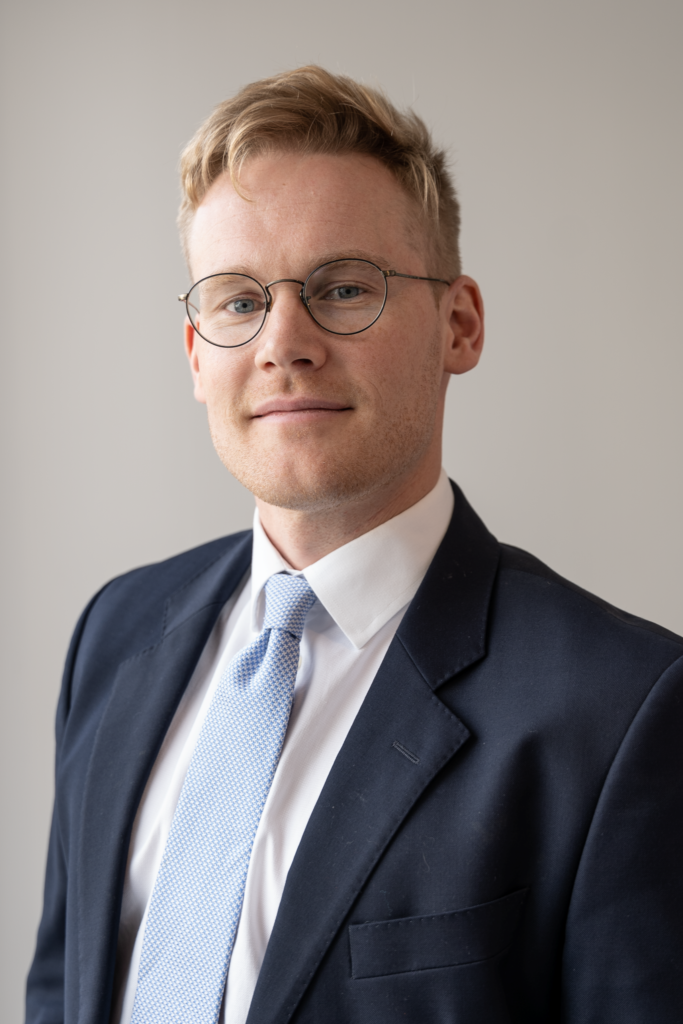
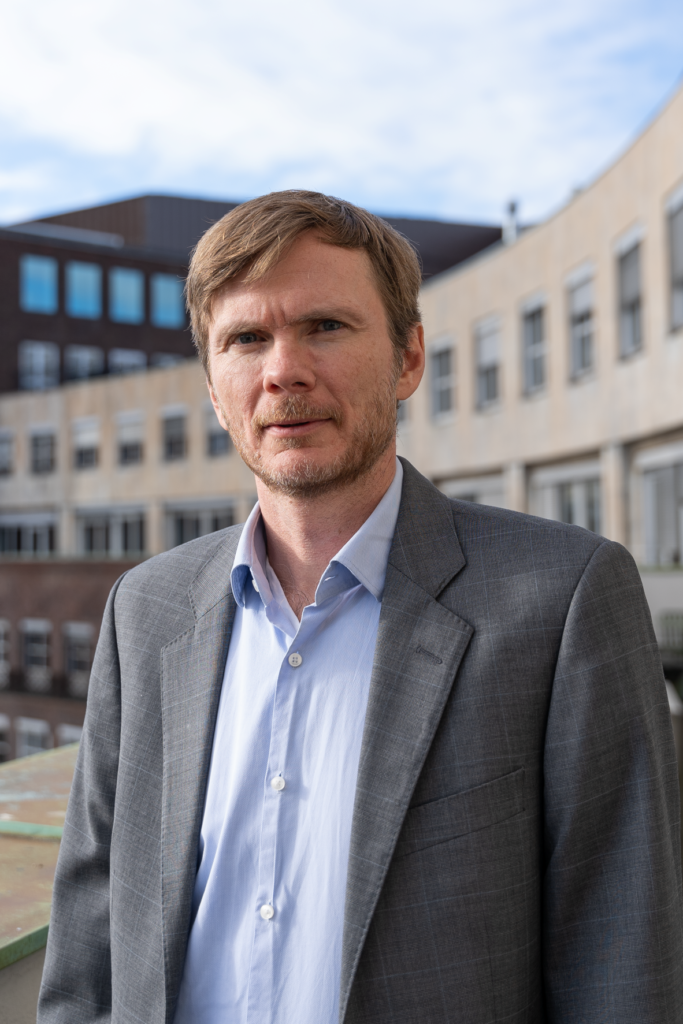
My name is Erik and in 2023 I was an intern in the Agribusiness and Manufacturing department (Scalable Enterprises).
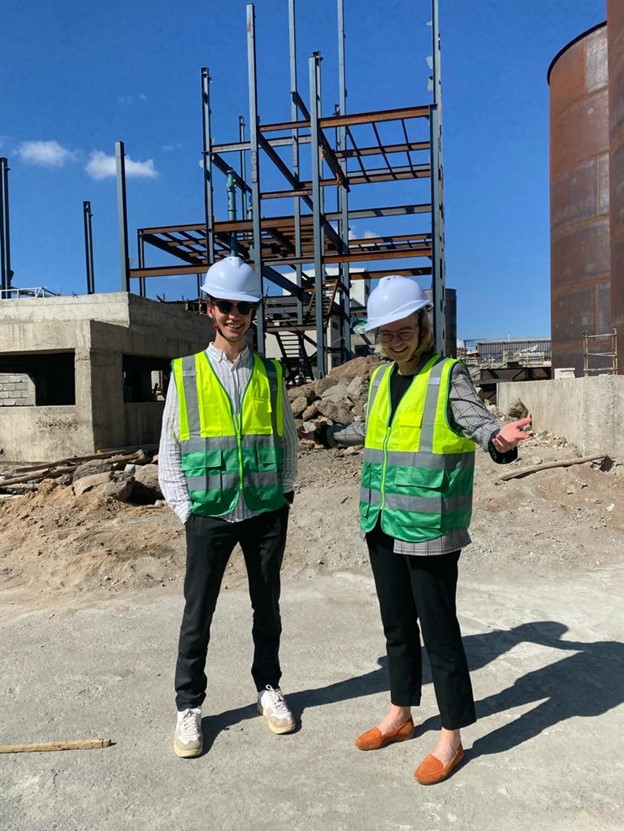
Erik Pettersen with Scalable Enterprises Associate Elida Unneberg
Before joining Norfund I took a bachelor’s degree in Business Administration and Economics from NHH Norwegian School of Economics. I was super excited by the opportunity to work on growth equity investments in emerging and frontier markets and intrigued by the dual goal of both financial returns and impact and the connection between them.
Norfund’s Scalable Enterprises department is focused on driving industrialization, economic growth, and job creation by investing in scalable enterprises in agribusiness and manufacturing. These sectors are crucial for economic growth and job creation in Africa. In agribusiness, Norfund’s investments aim to drive productivity, link smallholder farmers to markets, increase production, and create jobs. In manufacturing, Norfund recognizes the sector’s potential as a key enabler of economic growth and transformation. The focus here is on developing a strong manufacturing base in Africa, where currently a significant portion of food, beverages, and similar processed goods are imported.
During my internship, I worked on several different projects in various stages of the investment process and on both equity and debt instruments. I got to be part of the first meetings with and screening of potential targets. Working with project teams, I enjoyed discussing and evaluating the historic and projected financials, the commercial part of the company and trying to find the appropriate deal structure taking into account risk and growth prospects. I got to see how Norfund works with consultants and industry experts to add on to the knowledge of the project team in the due diligence process. I was assigned to the teams of several portfolio companies and got an insight into how Norfund is actively working with the management and board, adding value by providing guidance on environmental and social issues as well as business issues.
A highlight of my internship was my trip to Nairobi and Addis Ababa. I was welcomed, and very impressed, by the Nairobi team, I visited the sites of a potential investment and met with the due diligence providers. This gave a valuable insight into the operations of manufacturing company and the challenges and opportunities in Kenya and surrounding markets. In Addis we talked to farmers, traders and cooperatives learning about how they work while exploring how to source inputs for our backward integration expansion.
Norfund invests in Banco Ademi to boost MSMEs in the Dominican Republic
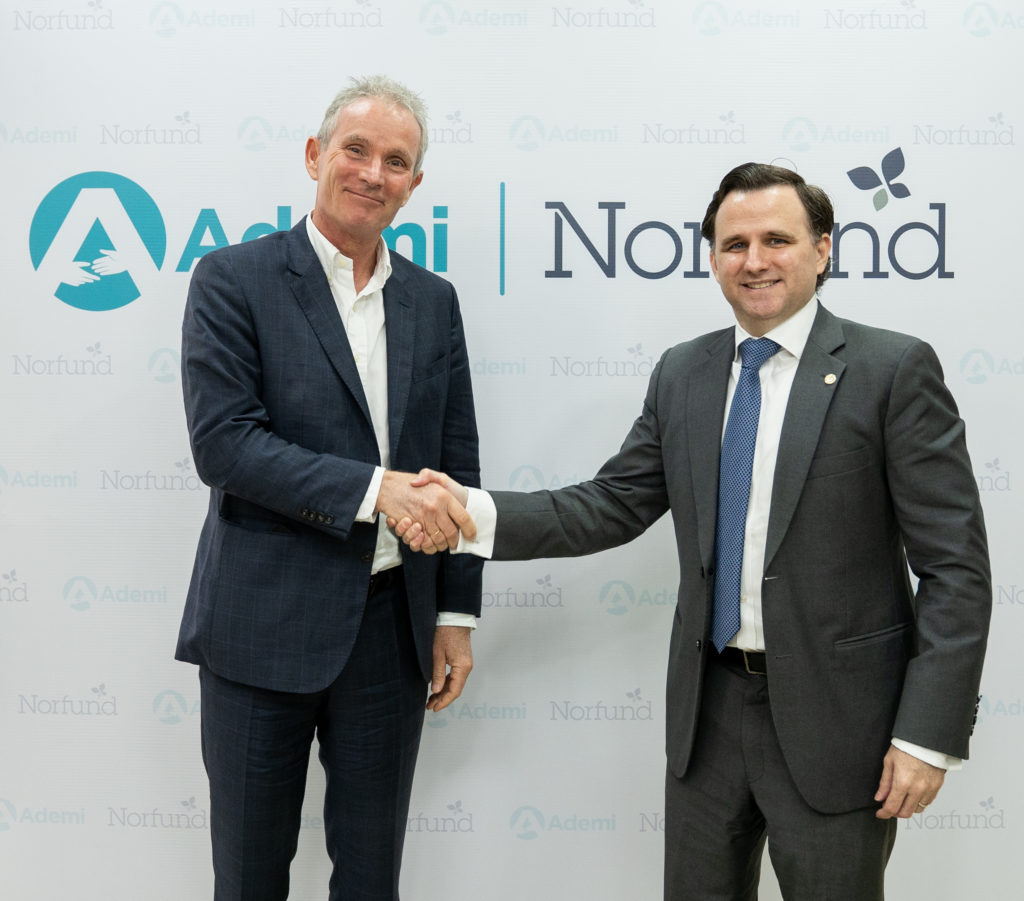
Norfund invests hRD$569 million (USD 10 million) in Banco Múltiple Ademi, aimed at benefiting its diverse client portfolio, predominantly comprised of micro, small, and medium-sized enterprises (MSMEs) in the Dominican Republic.
The strategic alliance reflects a commitment to supporting the growth and dynamism of MSMEs.
Andrés Bordas, the Executive President of Banco Ademi, emphasized the significance of the collaboration, stating, “Thanks to this agreement with Norfund, microentrepreneurs will be able to continue to grow and strengthen micro and small businesses in the Dominican Republic, which is our mission as a bank.”
The Norfund team, present at the agreement’s signing, acknowledged Banco Múltiple Ademi as a key player in providing credit and savings products to the base of the pyramid, fostering financial inclusion in the Dominican Republic.
Highlighting the importance of capital access for economic growth and job creation, Norfund emphasized the crucial role of Banco Ademi.
“In the Dominican Republic, financial inclusion is low, at 56%, and the country has a high percentage of its workforce dedicated to informal activities, according to the Global Alliance for Financial Inclusion. This makes the development role of entities like Ademi even more important, especially given the complement of financial education and customer protection principles that the Bank is committed to providing to its customer base,” says Norfund Investment Director Heidi Achong.
About Banco Múltiple Ademi
Banco Múltiple Ademi was founded in 1983 by Don Camilo LLuberes Henríquez as the Association for the Development of Microenterprises, Inc. (Ademi). It later evolved into Ademi Development Bank Ademi, S.A. in 1997, and transformed into Banco de Ahorro y Crédito Ademi in 2005. Establishing itself as the largest savings and loan bank in the country, particularly in the microbusiness segment, the entity transitioned to Banco Múltiple Ademi in 2013, becoming the sole specialized microfinance institution in the Dominican Republic.
Scaling private capital investments fifteen-fold in India
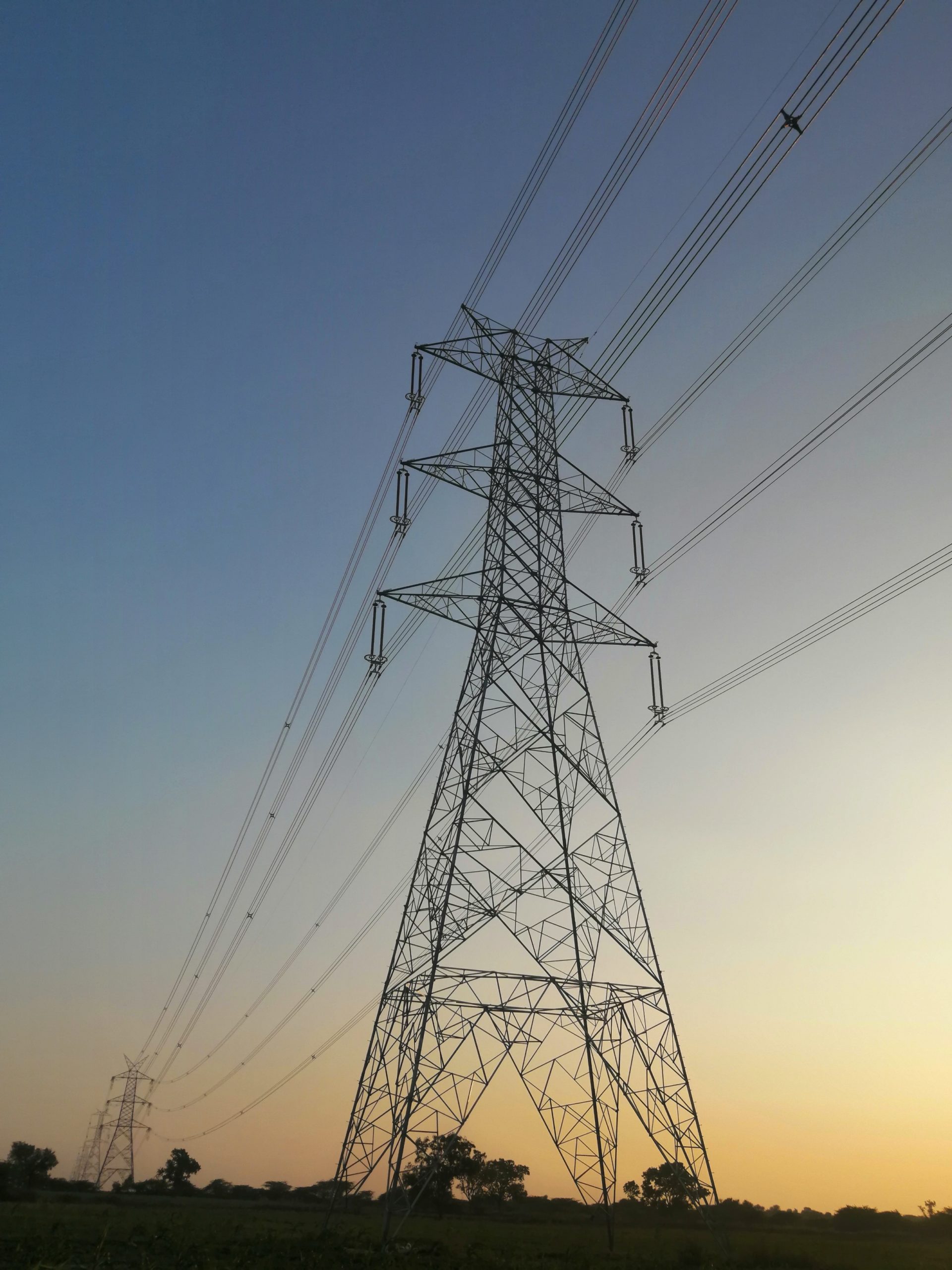
The Climate Investment Fund and KLP are investing in the development of 144 km of high-voltage lines to connect 2.5 GW of solar and wind power in India. By replacing planned and existing coal power, it will avoid 5.2 million tons of CO2 — equivalent to 10% of Norwegian emissions. For every rupee invested by Norfund, 15 rupees are mobilized from private capital.
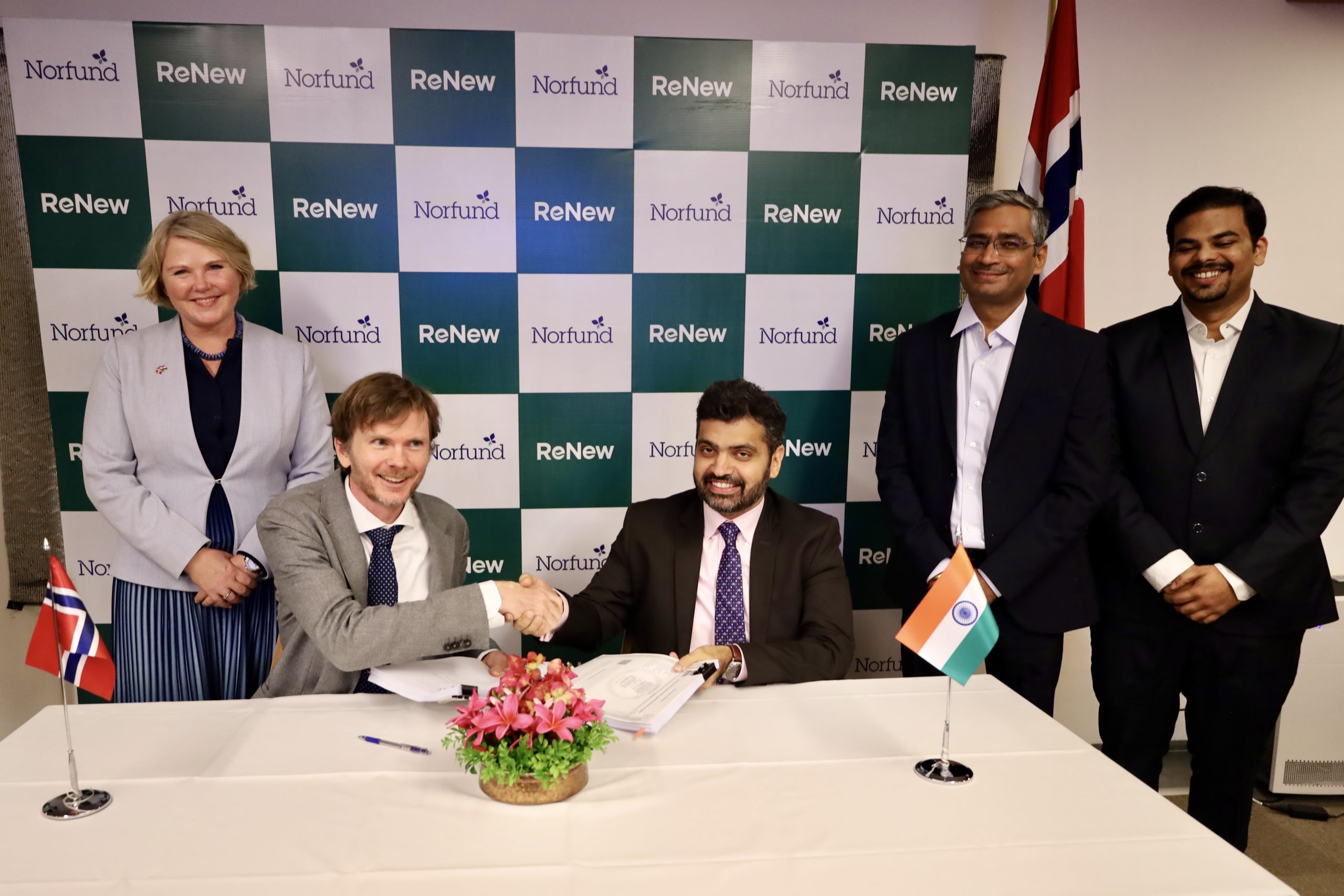
Signing between the Climate Investment Fund, ReNew and KLP in India the 15th of November 2023.
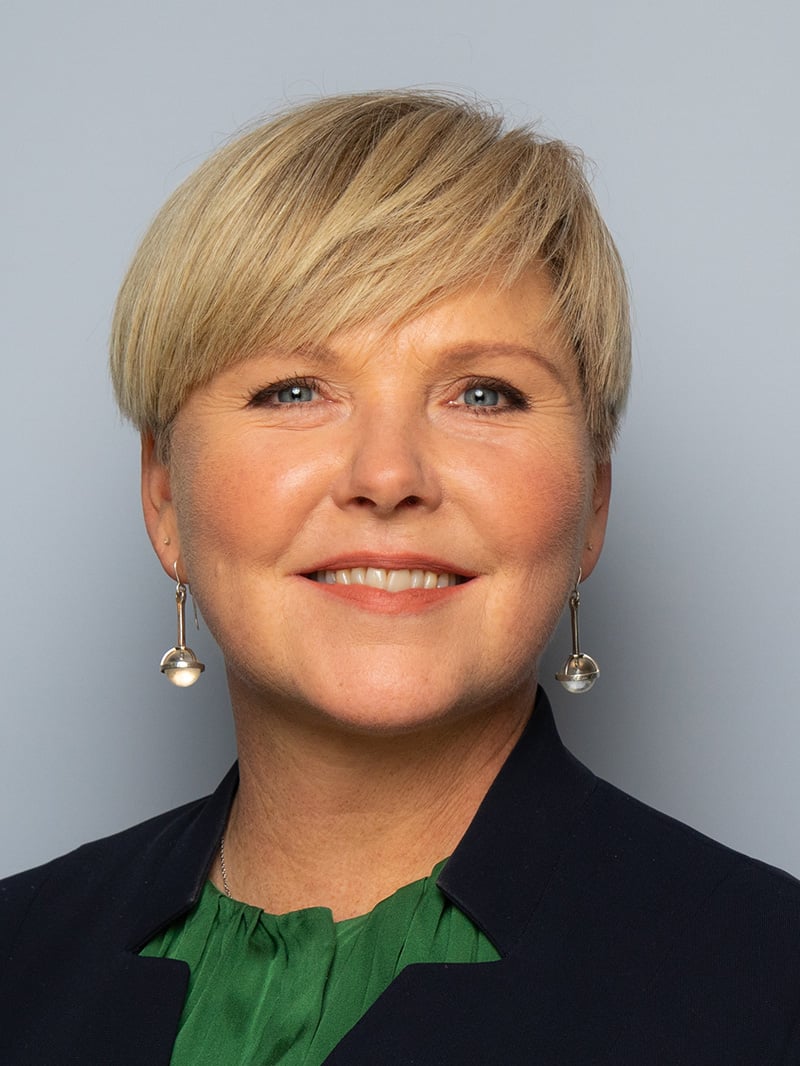
The agreement with the Indian developer ReNew is signed in connection with Minister of International Development Anne Beathe Tvinnereim’s visit to India. During her trip Tvinnereim also visits SAEL, a company pioneering in bioenergy development. SAEL’s innovative method utilizes straw, currently being burned in fields, for energy production. This not only reduces greenhouse gas emissions, but also mitigates local air pollution.
“To secure the necessary investments for the vital energy transition, public funding must mobilize private capital. The signing between the Climate Investment Fund, ReNew and KLP is a great example of this. It also shows how Norwegian investments are helping India reach its goals of installing 500 GW of non-fossil capacity by 2030”
Anne BeatHe Tvinnereim, Minister of international development
Solar and wind energy are geographically dispersed resources and require significant investment in power lines to transfer the power from the areas most suitable for solar and wind farms to where the power is needed and balance the grid.
In partnership with the Indian company ReNew Power, the Climate Investment Fund, managed by Norfund, and KLP, Norway’s largest pension company, are now investing up to 760 million rupees (102 million NOK) in a 49% share in a project in Gadag, Karnataka, Southern India. The project consists of the development of a new transformer station and 144 km of high-voltage lines (400 kV).
“Through the investment, we are helping to connect 2.5 GW of planned expanded solar and wind power in the south of the country to the national grid”, says Bjørnar Baugerud, head of Norfund’s Climate Investment Fund.
The connected projects will produce approximately 6,300 GWh, which results in avoided emissions of 5.2 million tons per year. This corresponds to 10.6% of Norway’s annual emissions – or emissions from 2.7 million Norwegian petrol cars.
Enormous financing needs require the mobilization of private capital
India is the world’s second largest producer of coal-fired power, and with the world’s largest growth in energy demand, the country must, according to the IEA, increase its energy production in the next 20 years by as much as the entire EU produces today. In 2022 India increased coal power generation by 12.4%, and emissions from power generation rose by almost a sixth, to 1.15 billion tons, according to a Reuters analysis.
Last Monday, the Indian energy minister announced that the country is planning for an additional 30 GW of new coal power, in addition to the 50 GW that are all on the way, to avoid power shortages. For comparison, total capacity for Norwegian hydropower is 33 GW.
If the country is to base its growth on renewable energy, a lot of capital is required: BloombergNEF has calculated that India needs $233 billion in investment just to meet the government’s wind and solar energy targets by 2030.
“The needs are enormous. And we can only meet those needs if we use public capital to mobilize private capital. We are now doing that through the Climate Investment Fund”, says Tvinnereim.
When Norfund gets KLP on the ownership side of the project together with the Indian developer ReNew, the project also gets access to loans from private banks. This means that for every rupee Norfund invests in the project, 15 rupees are mobilized in private capital.
The climate investment fund was the most important contributor to Norway reaching the government’s goal of doubling total Norwegian climate financing compared to 2020 already last year, when the fund’s investments of NOK 2.1 billion mobilized a total of NOK 5.68 billion in private climate financing.
The fund’s investments in new renewable energy in 2022 will help to avoid emissions of 6.2 million tons of CO2e per year — equivalent to 13% of Norway’s annual emissions.
“KLP is pleased to increase our climate investments in India. We expect that the project will both have a significant climate effect and provide a stable and predictable return for KLP’s owners“
Eric Nasby, investment analyst at KLP
Need 300 billion for investments in the power grid
India has previously launched plans for half of the country’s energy to be renewable by 2030. In the government’s plans to invest in upgrading the power grid, it is planned to increase the capacity for transmission between the regions from 112 GW to 150 GW by 2030, which alone will require total investments of NOK 300 billion.
In the new plan from the Indian government, part of the need to stabilize the grid is also planned to be covered by batteries, with plans for 54.5 GW of storage by 2030. However, such investments require a lot of capital.
“There are a number of larger hybrid projects that combine solar, wind and battery storage in India that need financing in India. Given the size of the fund, it is limited how much we can contribute to such projects as of today, but the needs and opportunities to put more money to work are great”, says Baugerud.
Norfund invests in fintech targeting SMEs
Norfund is investing USD 7.5 million in Funding Societies, Southeast Asia’s largest digital financing platform for small and medium-sized businesses. The goal is to help create new jobs in Indonesia and Vietnam.
In emerging economies, small and medium-sized enterprises (SMEs) account for 7 out of 10 jobs, according to the World Bank. However, many of them struggle to access basic financial services such as savings, insurance and loans.
Funding Societies is a fintech platform specializing in short-term financing for SMEs in Southeast Asia. The company’s ambition is to play a decisive role in bridging the gap between those who have access to finance and those who do not.
“We are very happy to be able to support Funding Societies in expanding their reach and thereby further increasing financial inclusion, so that more SMEs can grow and create badly needed jobs in Southeast Asia”.
Erik sandersen, evp, Norfund
Difficult for SMEs to access capital
In developing countries, a lack of financial infrastructure constitutes a significant obstacle to social and economic development. A study carried out by Funding Societies shows that 70% of the small and medium-sized companies in their markets depended on start-up capital from their own savings and support from family and friends. Only 23% were able to obtain funding from traditional banks, and 7% used alternative funding sources.
Fintech opens up new opportunities for offering customized loan products, and the ambition is that Norfund’s investment will contribute to creating more jobs in small and medium-sized enterprises in Indonesia and Vietnam.
“We are honored to collaborate with Norfund to meet the growth capital needs of several underserved SMEs in Southeast Asia.”
Fintech creates new opportunities – not least for female entrepreneurs
76% of the world’s adult population now has a bank account (World Bank). This is a significant improvement from 68% in 2017 and 51% in 2011. Nevertheless, there is a long way to go before everyone has access to basic financial services, which in turn is an important driver for people to escape poverty.
There is also a significant gender gap: in developing countries in 2021, 74% of men had a bank account, while only 68% of women had the same. A study of female small-scale entrepreneurs in Indonesia shows that limited financing from banks, due to high interest rates and complicated loan documents, is a major obstacle for female business owners.
“Norfund sees great opportunities within fintech that reduces costs and the ability to include both individuals and companies that currently lack financial services,” says Sandersen.
Norfund has previously invested in other fintech including Wave Mobile Money, operating in Senegal and the Ivory Coast; Amartha, a lending platform in Indonesia with a focus on financing rural women; and in Lula Lend, a technology-driven financial institution with a new technology for to assess the risk of loans to small and medium-sized enterprises in South Africa. Last year, Norfund also invested in the fund Integra Partners Fund II, which targets companies in Southeast Asia that focus on financial inclusion through the use of new technology.
New tech growth fund will boost exceptional African tech entrepreneurs
Norfund has invested in Norrsken22, a new tech fund supporting technology growth and impact across Africa. The fund raised 205 million USD in total, surpassing its target of 200 million USD.
Norrsken22 is focused on entrepreneurs developing fintech, edtech, medtech and market-enabling solutions that will deliver strong returns and have a positive impact. At its inception, the fund was supported by over 30 unicorn founders.
“We are happy to contribute to the Norrsken22 Fund, a seasoned team and an already promising portfolio with more to come,” says Norfund Senior Vice President Bernt Brun.
“Through our investment we contribute to providing capital to startups on the continent, aiding the expansion of tech ecosystems in emerging markets. This facilitates innovation, drives economic growth, and paves the way for the jobs of the future. Additionally, we facilitate technological innovations that enable developing countries to ‘leapfrog’ developed markets by adopting modern business solutions.”
Since the fund’s first close, a number of high-profile institutional investors have joined the investor base: British International Investment (BII), International Finance Corporation (IFC), US International Development Finance Corporation (DFC), Standard Bank, Norfund and Hannover Re.
Natalie Kolbe, Managing Partner of Norrsken22, says, “The timing of the fund ideally positions Norrsken22 to support a growing African tech tailwind. The transformative power of technology can leapfrog traditional ways of doing business, and Africa has the opportunity to lead the World with its solutions. We are excited to be partnering with so many promising startups that can have a positive impact across Africa. We are delighted to see an active and growing early-stage investor community growing across the continent, however we still see a gap at growth stage tech funding in the continent. We see a huge opportunity here and are excited to continue investing at this stage.”
Norrsken22 has already made five investments. The portfolio includes South African challenger bank Tyme Bank, African business-to-business digital commerce platform Sabi, Africa’s leading identity verification solution, Smile ID and auto financing platform Autochek.
About Norrsken
Norrsken is an impact ecosystem where entrepreneurs can find everything they need to make saving the world their business. They run Norrsken House in Kigali, Rwanda, the largest startup hub in East Africa, and Norrsken House in Stockholm, Sweden, an award-winning co-working space for impact entrepreneurs. They also icubated Norrsken VC – a €130 million impact VC fund and we manage the Norrsken Impact Accelerator for early-stage impact startups. Norrsken is a non-profit, non-partisan and non-political foundation, with a strong belief in effective altruism. It was founded by Niklas Adalberth, co-founder of payment services unicorn Klarna.
Solar panels on roofs are reversing the energy access trend in Africa
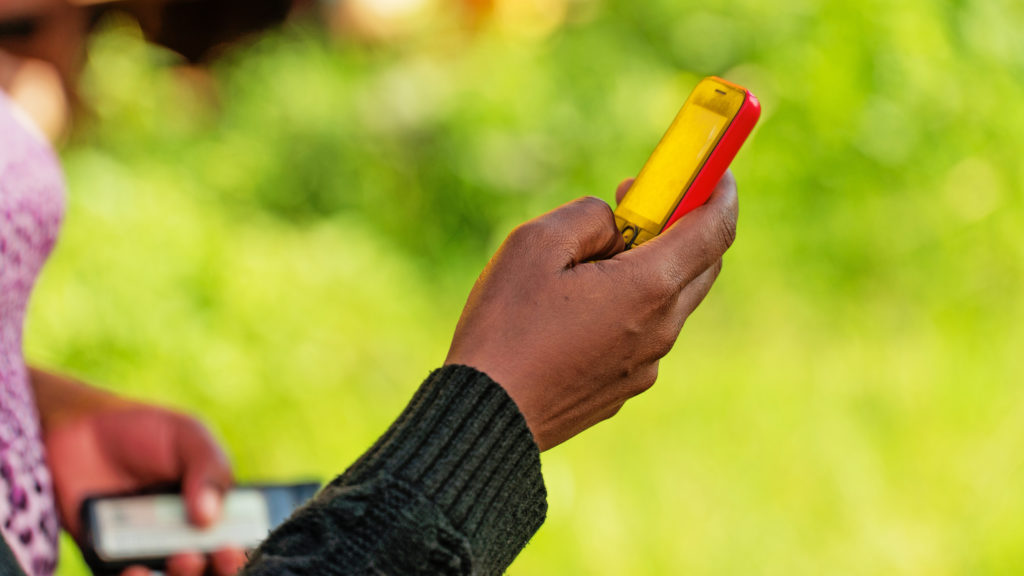
After the number of people without access to energy increased for the first time in several decades in 2022, the trend has turned positive again in 2023, according to figures from the IEA’s World Energy Outlook, launched 24th October. Norfund is investing in several companies that offers simple solar installations that can be payed via mobile phones.
“We see that this business model is now really making a significant contribution, and over recent years we have invested in a number of such companies which improve quality of life and employment opportunities through energy access,”
Birgit Edlefsen, investment director in norfund
745 million people lack access to electricity
The World Energy Outlook from the International Energy Agency (IEA) annually highlights global energy challenges ahead of the UN climate conference, COP, which this year takes place in Dubai. Last year’s report showed that the number of people without access to energy increased by around 6 million to about 760 million. However, this year’s report shows the number is expected to drop to 745 million in 2023.
80% of those lacking electricity, 600 million people, live in Sub-Saharan Africa, where simple solar installations with batteries and energy-efficient solutions are making particularly important contributions to increasing access. The IEA estimates that the number of people with access to such solutions in Sub-Saharan Africa has increased by about 25 million since 2019, surpassing 45 million in 2022. This means these systems now provide electricity to 4% of African households. So-called mini-grids provide electricity to 2% of the population in Sub-Saharan Africa, while regular grid access provides for more than 40%.
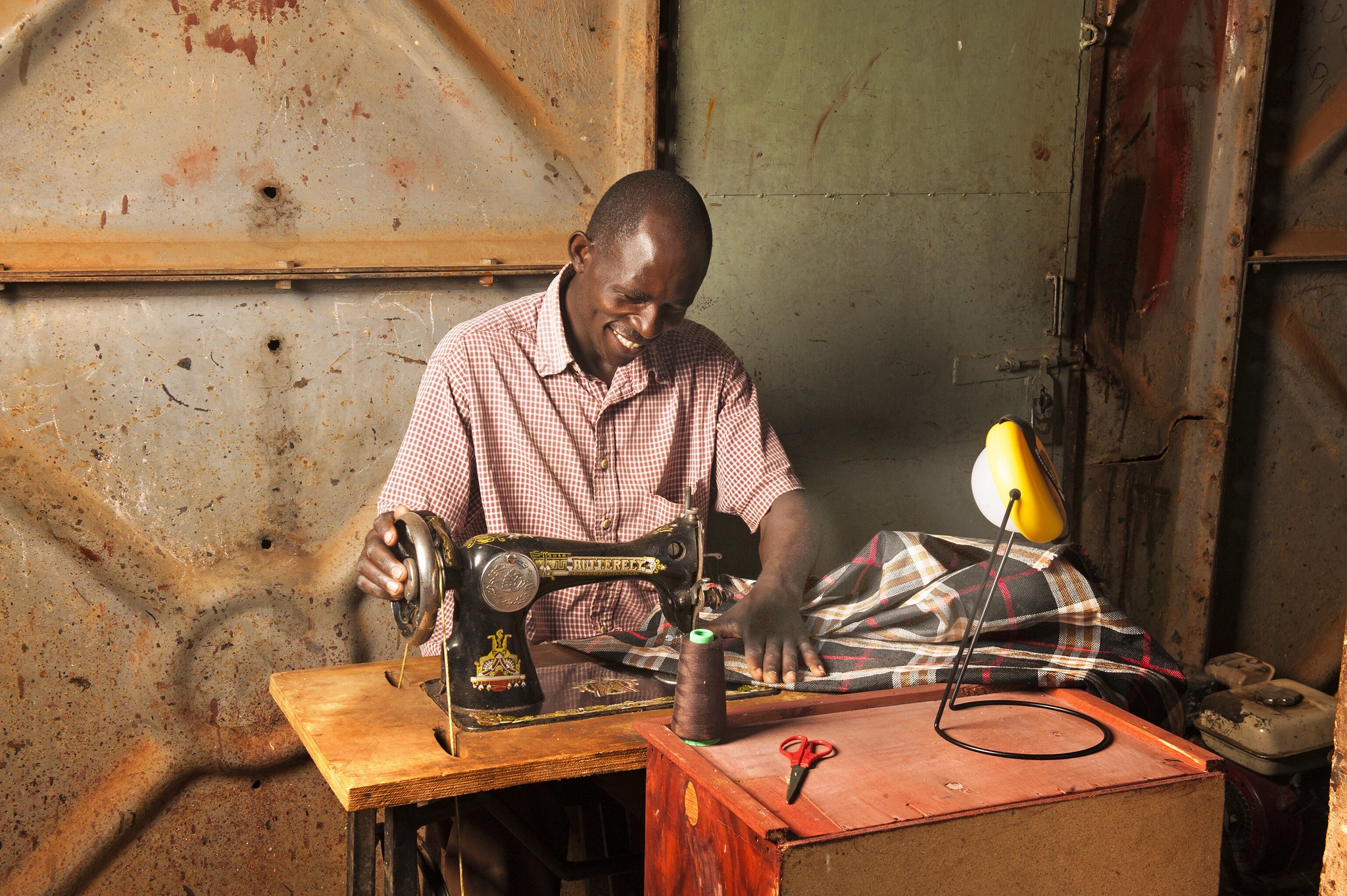
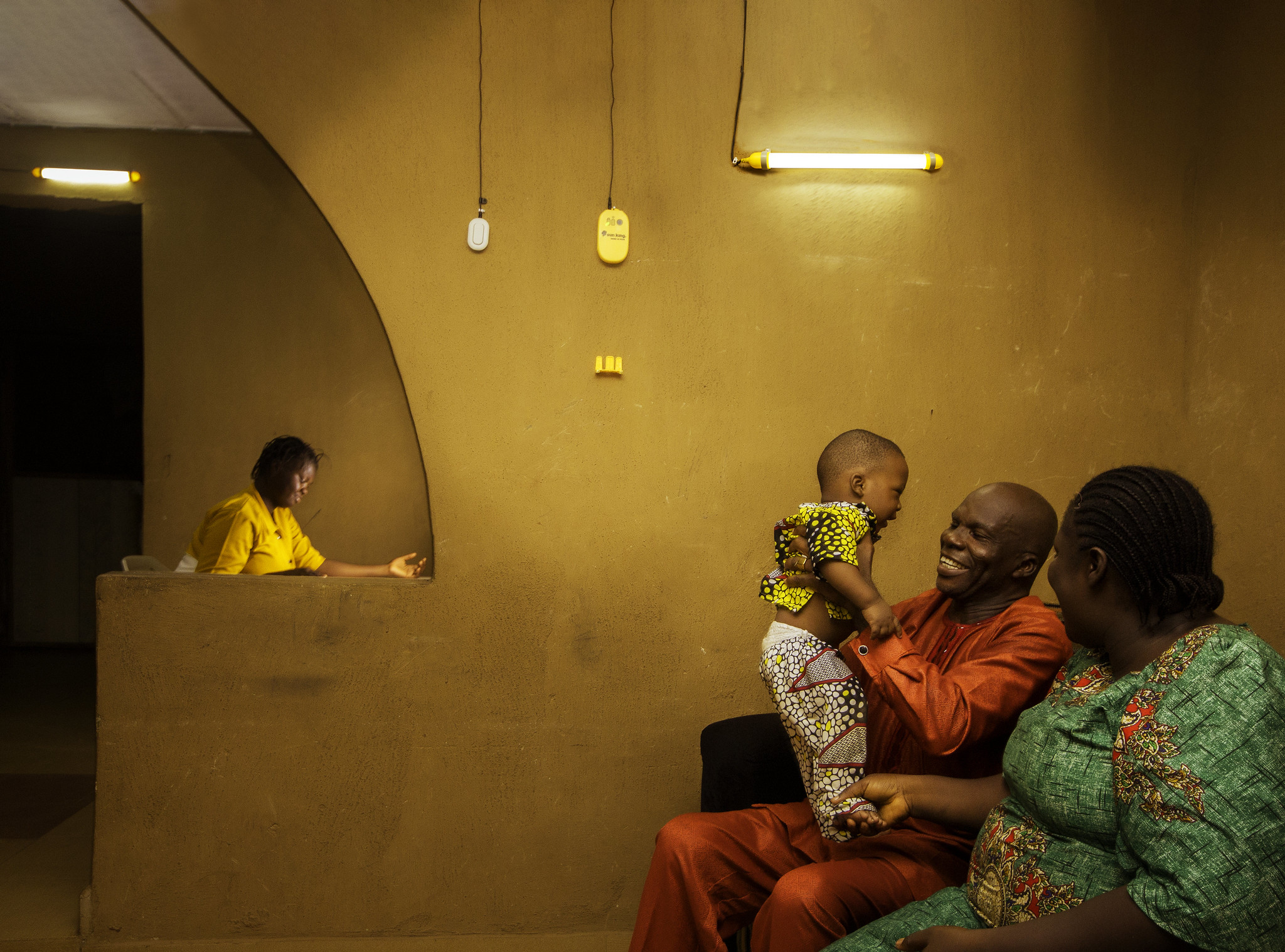
Solar lantern from Sun King provides light to a tailor.
“Access to energy is a prerequisite for job creation, economic growth, and improved living standards in developing countries, and this is therefore an important focus area for us,” says Edlefsen.
1.8 million new households gained access to electricity through the companies Norfund invested in within so-called off-grid and mini-grid in 2022, shows Norfund’s annual report.
Investment in Sun King to provide further access
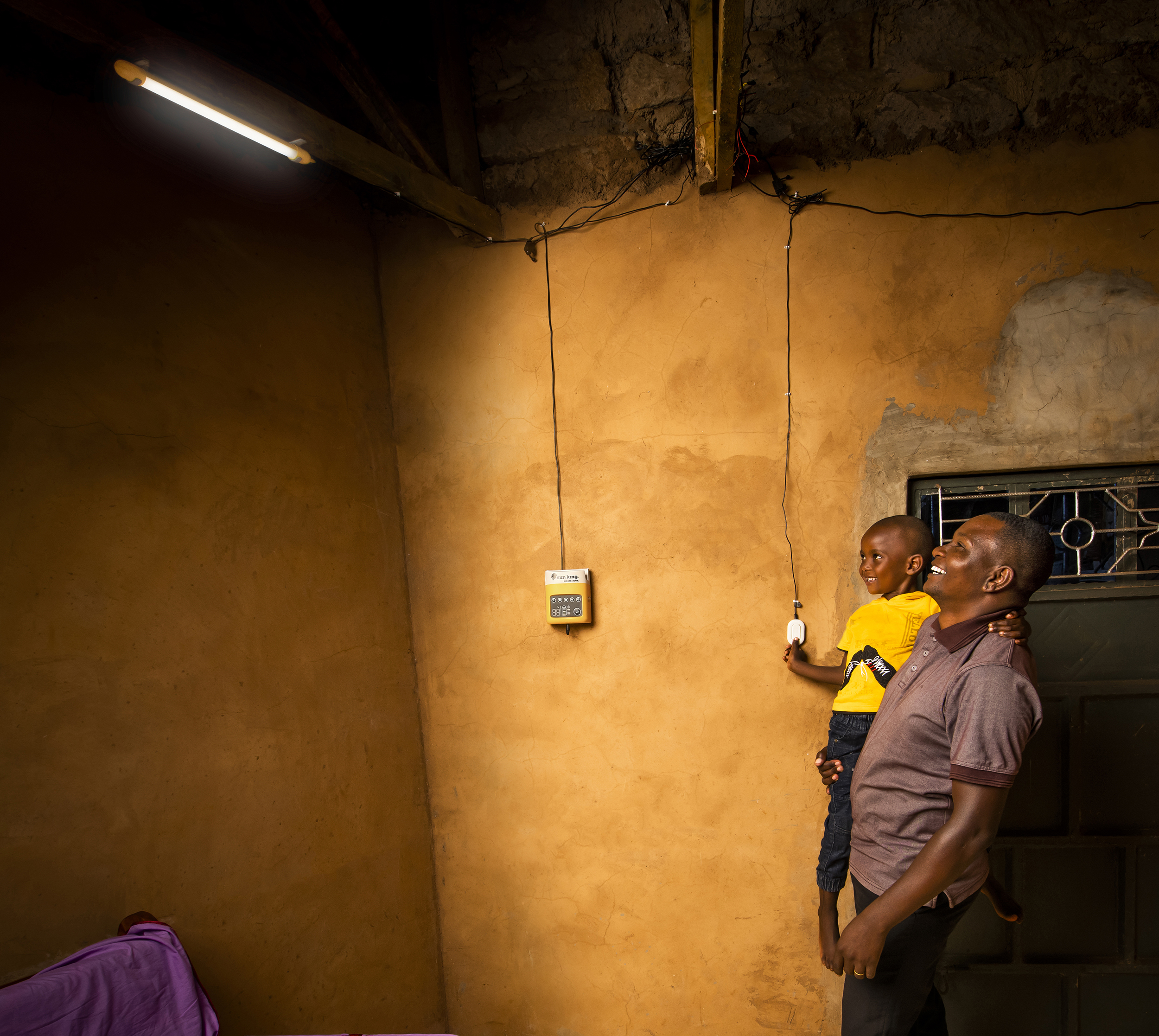
Norfund is now investing 20 million dollars in a securization instrument that provides working capital to Sun King Financing Limited, to increase access to energy in Kenya. The company is one of the largest providers of solar home systems and has already powered over 100 million people in Africa and Asia.
“Reduced prices on solar panels, batteries, and energy-efficient solutions, have made it possible to develop a business model for solar home systems that has now matured enough to build economies of scale, but it depends on access to affordable capital, and here we see that Norfund can make important contributions,” says Edlefsen.
These solar-powered lights is both safer, cheaper and brighter than a kerosene lamp.
Norfund has previously provided similar instruments for other companies in the solar home system space and has been a front runner in realizing these kind of securitization transactions.
Sun King customers can choose to split payments into affordable installments, which can be made via mobile or cash for as little as $0.15 per day. Their Sustainable Financing Framework shows that about half of the Kenyan customers are women, most of whom are accessing formal financing products for the first time.
Investering i klimatilpasning skaper jobber i sørafrikansk landbruk
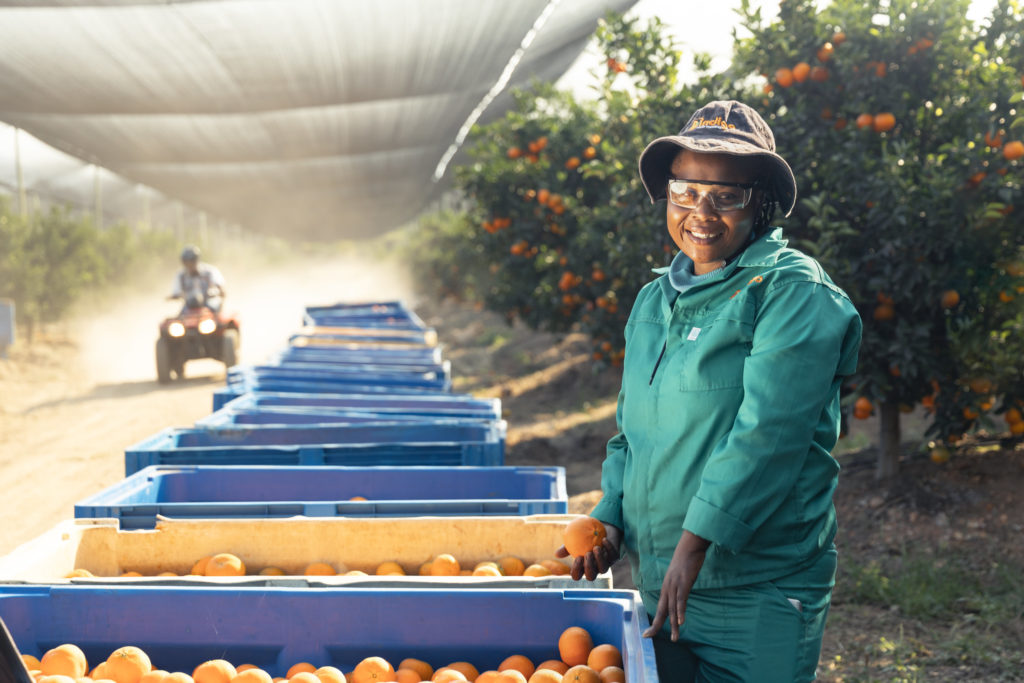
Klimaendringer rammer produksjonen av populære sitrusfrukter. Gjennom en investering i et sørafrikansk selskap som blant annet leverer mandariner til Norge, vil Norfund bidra til klimatilpasning i form av nett som beskytter avlinger mot hagl, og samtidig bidra til nye jobber.
Bildekreditering: ANB
– Verden må drastisk trappe opp finansieringen av klimatilpasning for å bevare arbeidsplasser og matproduksjon, og investeringer som denne kan gi avgjørende bidrag, sier utviklingsminister Anne Beathe Tvinnereim.
Norfund investerer nå 10 millioner USD i The ANB Group, et sørafrikansk fruktselskap som produserer og distribuerer sitrusfrukter og tropiske frukter til markeder i Europa, Asia og Nord-Amerika. Her i Norge vil du kunne finne ANBs «Clemengold»-mandariner i butikkhyllene.
I takt med global oppvarming tar ekstremvær stadig nye former. De siste årene har haglbyger utgjort en økende trussel mot det sørafrikanske landbruket. Høyere temperaturer kombinert med økt fuktighet i atmosfæren skaper nemlig ideelle forhold for dannelsen av store hagl, som kan forårsake skader på eiendom, biler og mennesker. I Sør-Afrika har store avlinger blitt fullstendig ødelagt av uforutsigbare haglbyger.
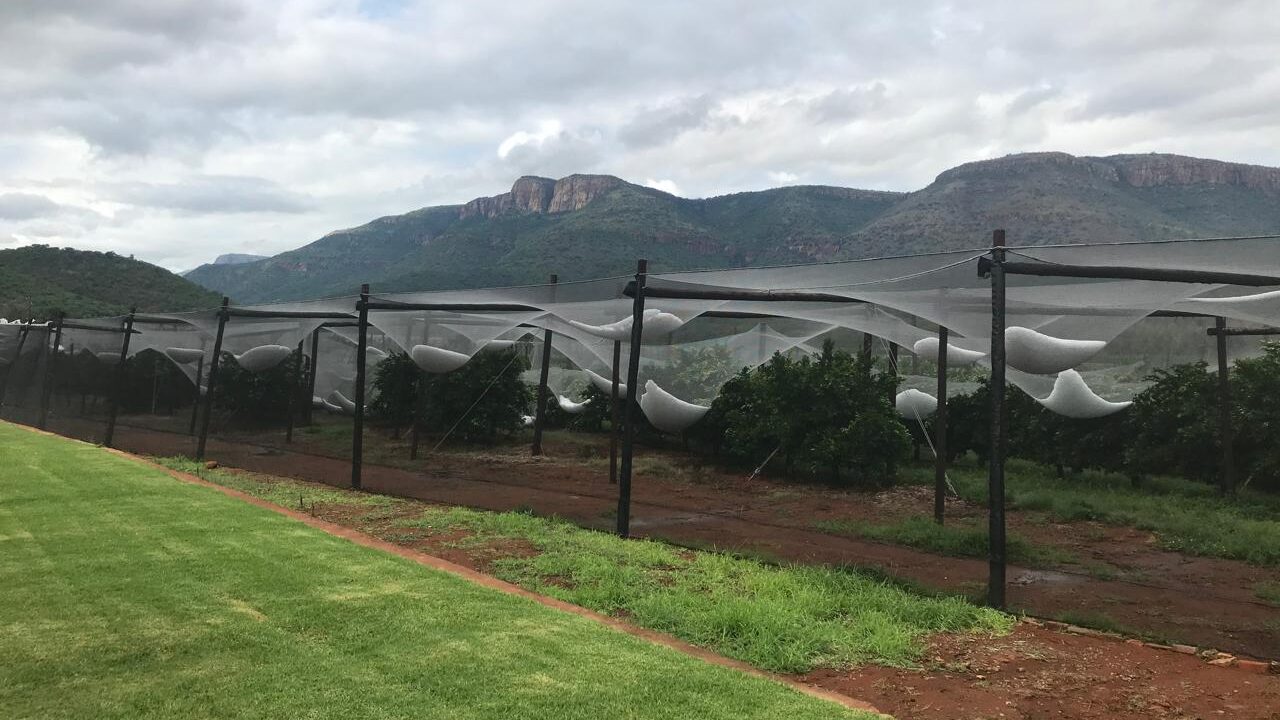
ANB investerer derfor nå i netting som effektivt beskytter avlinger mot ekstremvær som hagl, varme, vind og sterkt sollys.
Etter haglstormen
– Norfunds investering skal blant annet finansiere klimatilpasning i form av netting som reduserer svinn og vannforbruk, samtidig som volum og kvalitet øker, sier Simen Berger Øby, investeringsdirektør i Norfund.
Minister Anne Beathe Tvinnereim
– Denne investeringen er et eksempel på at klimatilpasning ofte handler om håndfaste løsninger som kan være ganske enkle, men som krever store investeringer. Det er avgjørende at vi bruker offentlige midler til å utløse privat kapital til slike investeringer, slik Norfund gjør, sier Tvinnereim.
Investerer i solenergi og energieffektivisering
Sør-Afrikas energimiks er dominert av kullkraft og har store utfordringer med strømbrudd.
– Virksomhetene våre har allerede investert i installasjon av solcellepaneler, og vi vil fortsette å redusere karbonavtrykket vårt gjennom enda større bruk av solceller på gårdene og bygningene våre, samt energieffektivisering, sier AJ Esser, co-CEO i ANB-gruppen.
Nye jobber i land preget av arbeidsledighet
Omtrent halvparten av Sør-Afrikas 60 millioner innbyggere lever i fattigdom, og arbeidsledigheten har i flere år ligget mellom 25 og 30 prosent. Lav vekst kombinert med høy inflasjon bremser investeringsvilligheten og bedrifters mulighet til å ansette flere.
Simen Berger Øby
Norfund formål er å skape jobber og forbedre levekår gjennom investeringer i bærekraftige virksomheter. ANB har allerede 2200 faste ansatte i fattige og rurale strøk og gir arbeid til ytterligere 4000 under innhøstning. Målet er å øke kvaliteten på disse jobbene og skape flere i årene som kommer.
– Samarbeidet mellom Norfund og The ANB Group bidrar til å øke motstandsdyktigheten i det sørafrikanske jordbruket, og skape nye arbeidsplasser som bidrar til å bekjempe fattigdom på landsbygda i Sør-Afrika, sier Øby.
Investment in climate adaptation creates jobs in South African agriculture
Climate change affects the production of popular citrus fruits. Through an investment in a South African company, Norfund will contribute to climate adaptation in the form of nets that protect crops from hail and create new jobs.
Photo credit: ANB
“The world must drastically increase financing for climate adaptation to preserve jobs and food production, and investments like this can make a crucial contribution,” says Minister of International Development Anne Beathe Tvinnereim.
Norfund is now investing $10 million USD in The ANB Group, a South African fruit company that produces and distributes citrus and tropical fruits to markets in Europe, Asia, and North America. In Norway, you will be able to find ANB’s “Clemengold” mandarins on store shelves.
As a result of global warming, extreme weather is taking on new forms, and in recent years, hailstorms have posed an increasing threat to South African agriculture. Higher temperatures combined with increased moisture in the atmosphere create ideal conditions for the formation of large hail, which can cause damage to property, vehicles, and people. In South Africa, significant harvests have been completely destroyed by unpredictable hailstorms.
ANB is investing in nets that effectively protect crops from extreme weather such as hail, heat, wind, and strong sunlight.
After the hail storm
“Norfund’s investment will, among other things, finance climate adaptation in the form of netting that reduces waste and water consumption while increasing volumes and quality,” says Simen Berger Øby, Investment Director in Norfund.
Minister Anne Beathe Tvinnereim
“This investment is an example of how climate adaptation often involves tangible solutions that can be quite simple but require significant investments. It is crucial that we use public funds to leverage private capital for such investments, as Norfund does,” says Tvinnereim.
Investing in solar energy and energy efficiency
South Africa’s energy mix is dominated by coal power and faces significant challenges with power outages.
“While our various businesses have already heavily invested in the installation of solar panels, we still plan to improve our electricity efficiency and lessen our carbon footprint with more solar installations at our farms and packhouses,” says AJ Esser, co-CEO of the ANB group.
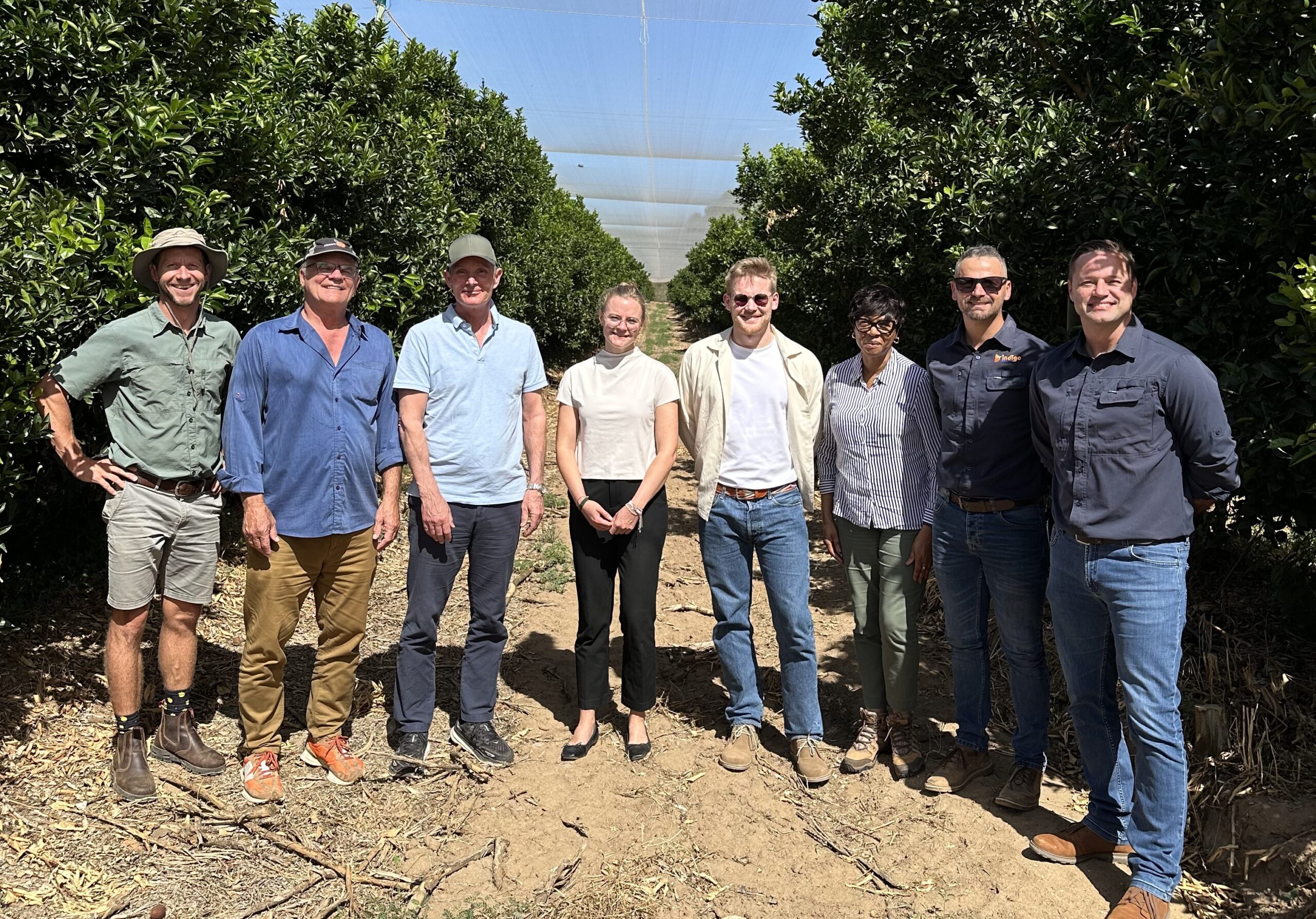
Tellef together with Elida Unneberg, Simen Berger Øby, and regional director Pindie Nyandoro on a visit to ANB Group, a South African company that produces and distributes citrus and tropical fruits. Norfund’s investment helps finance protective nets that shield crops from hailstorms.
New jobs in a country of high unemployment
Approximately half of South Africa’s 60 million inhabitants live in poverty, and unemployment has hovered between 25 and 30 percent for several years. Low growth combined with high inflation hinders investment and companies’ ability to hire more people.
Simen Berger Øby
Norfund’s purpose is to create jobs and improve lives through investments in sustainable businesses. ANB already has 2,200 permanent employees and at the height of the citrus season, this figure rises to above 6 000. The aim is to increase the quality of these jobs and create more in the years to come.
“The collaboration between Norfund and The ANB Group contributes to increasing resilience in South African agriculture and creating new jobs that help combat poverty in rural South Africa,” says Øby.
Clean water investment in India marks the first for pioneering W2AF Fund
A new investment in clean drinking water in rural India marks the inception of Incofin’s newly established Water Access Acceleration Fund (W2AF). Norfund’s 5 million EUR investment in the fund will contribute to bringing clean drinking water to the regions most affected by the global water crisis.
The W2AF fund was launched in March 2023 with total commitments of EUR 36 million, including Norfund’s contribution of 5 million EUR. The aim of the fund is to bring clean drinking water to 30 million people in the water-scarce areas in Africa and Asia by 2030, and they have plans to double this amount in the future.
The investment of EUR 7.5 million in Rite Water Solutions will improve water solutions in rural regions in India by providing comprehensive, cost effective and sustainable solutions for safe drinking water where the water sources is contaminated. Rite Water has deployed 2,500 purification units and impacted more than 2 million peoples in 12 states of India, contributing to SDG 6 of Sustainable Development Goals.
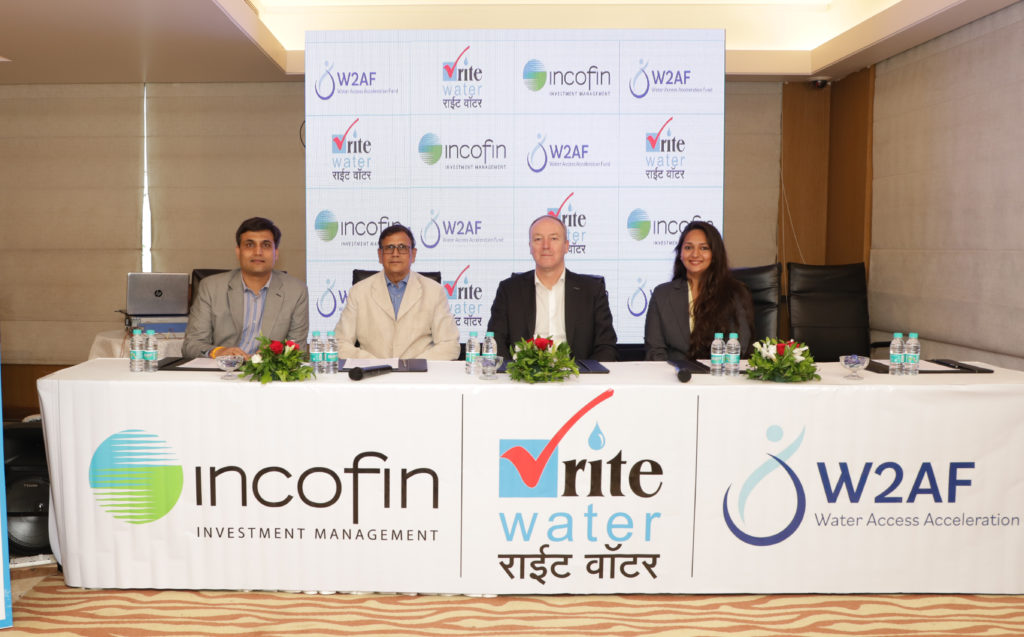
Rite Water Promoters & Incofin Co-CEO Geert Peetermans and Dhara Mehta at press conference in Nagpur
Water scarcity is, according to the UN, projected to increase with the rise of global temperatures as a result of climate change. Unless the progress increases dramatically, billions of people will lack access to clean water in 2030.
The fund is the first of its kind, with a combination of commercial private capital, development finance institutions and aid money to relieve some of the risk.
“The goal is that the new fund, by taking higher risks, can show that the business models can deliver, and thus also show the way for other investors in the water sector, so that even more people can have access to affordable and clean water.”
Delphine Gilbert, Investment Manager in Norfund
Today, 2 billion people lack access to clean drinking water. Climate change, population growth, and urbanization mean massive investments are needed to reach UN Sustainable Development Goal 6 of access to safe water, sanitation, and hygiene, but it has been challenging to mobilize capital to the sector.
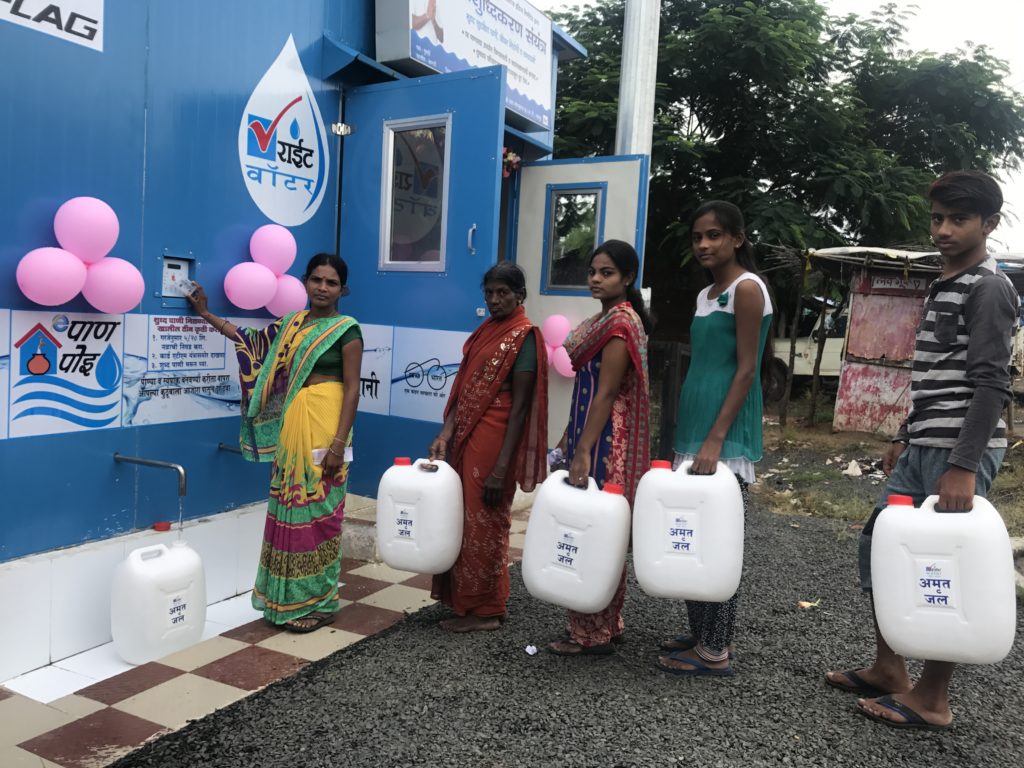
Rite Water beneficiaries at the water ATM
According to the World Bank, developing countries lose around 260 billion USD annually due to poor water supply. It’s estimated that each dollar invested in clean water yields a four dollar reduction in health costs. By pooling resources and expertise and catalyze additional private capital, there is hope to improve the water access for millions of people in Africa and Asia, fostering better health and economic development.
Norfund CEO Tellef Thorleifsson has announced that Bjørnar Baugerud, Senior Vice President in Norfund, will now head up the Climate Investment Fund.
Baugerud will be the first head of the Climate Investment Fund, which became operational in 2022. Through the Fund, Norfund has already put over 2 billion NOK to work, investing in renewable energy in developing countries with large emissions from coal and other fossil power production.
“None in the world is better qualified for this position than Bjørnar,” says Tellef Thorleifsson. “Having a designated responsible head will facilitate our important work in accelerating the global energy transition.”
Baugerud will also continue in his role as Senior Vice President in the Renewable Energy investment department.
“The work we do through the Climate Investment Fund is both important and incredibly motivating. I’m looking forward to taking on this new role and continuing the good work my colleagues have already put into motion,” says Baugerud.