Exit Analysis

Norfund’s mandate is to support the creation and expansion of viable and sustainable businesses to create employment in developing countries. In order to investigate delivery on the mandate, we have performed an analysis of the status of Norfund’s exited companies by end 2019.

The Survey and Analysis

The first exit analysis was performed in 2015. In 2019, a second analysis was undertaken, with standardized definitions and parameters to allow for continuous updates of the dataset and comparability over time.

In the exit analysis, companies are followed from time of investment to three years after Norfund’s exit to understand whether they survive, and if they thrive.

  • Survival: Survival rate is tracked during Norfund’s holding period and three years after Norfund exited the investment (post-exit).
  • Performance: The second aspect considered is company performance in job creation, financial indicators and other development impacts, tracked during holding period and 3 years post-exit.

Key Results

1. Norfund investments have a healthy survival rate, both during and after ownership.

During the holding period, the survival rate for investments is above 80 per cent. Three years after exit, more than 4/5 of companies that were active at time of exit are still active.
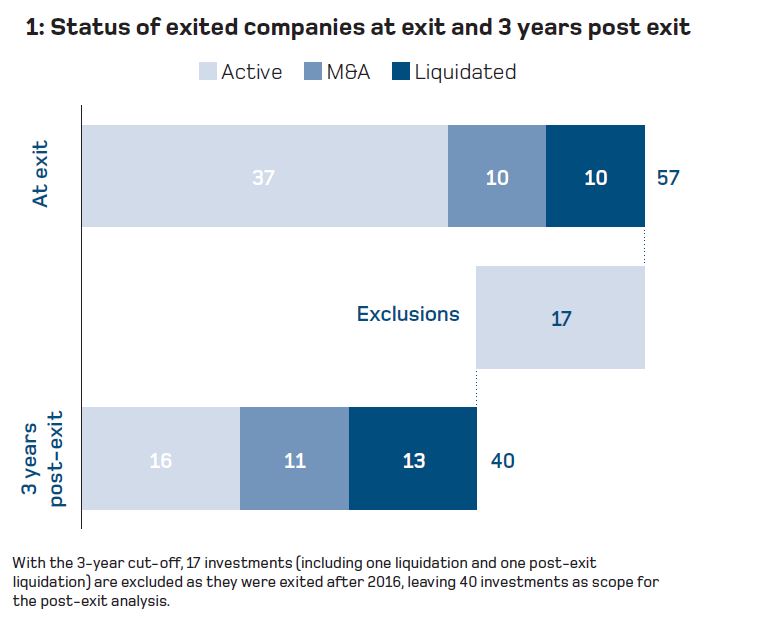
13 companies were liquidated by the 3-year post-exit mark, of which nine during our holding period and four after exit.

2. Performance in surviving companies is solid, both during and after Norfund’s investment.

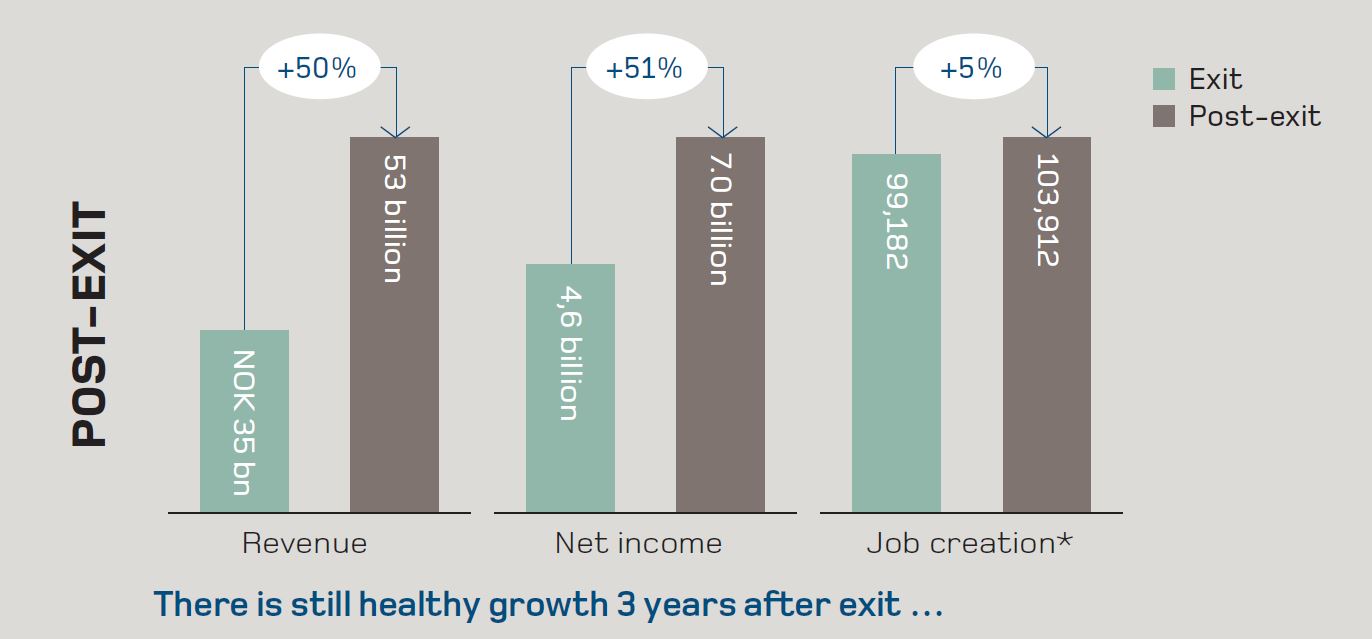
Overall, exited companies saw a doubling or more in revenue, net income and job creation from entry to exit, with double digit growth rates for most companies.
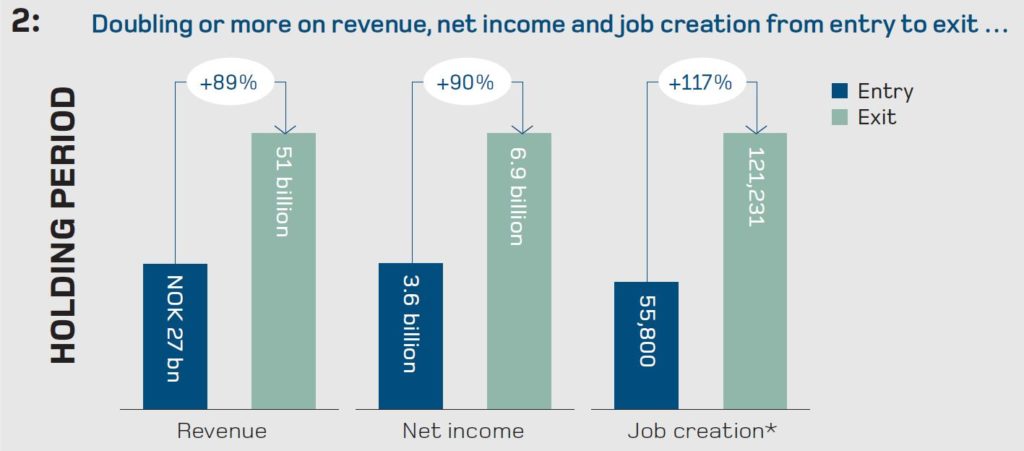
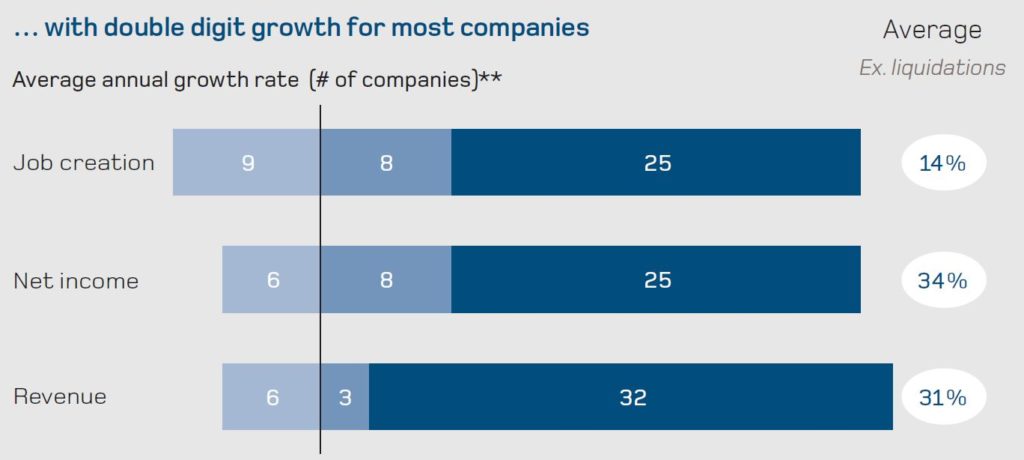
* Growth rate for job creation excluding the investee BRAC was +64% during holding period and +33% post-exit
** Dataset excludes liquidations

The overall post-exit performance showed healthy growth three years after Norfund’s exit with continued, though less steep, growth for many companies.
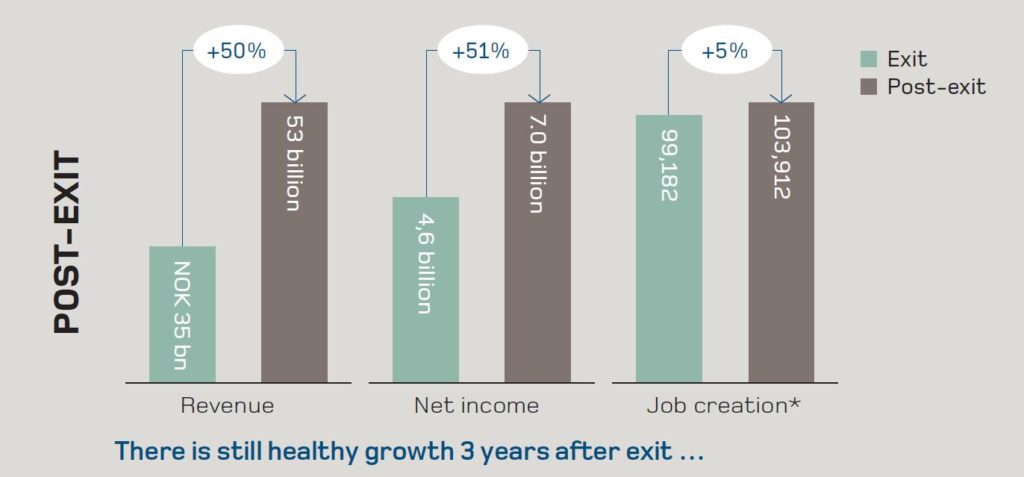
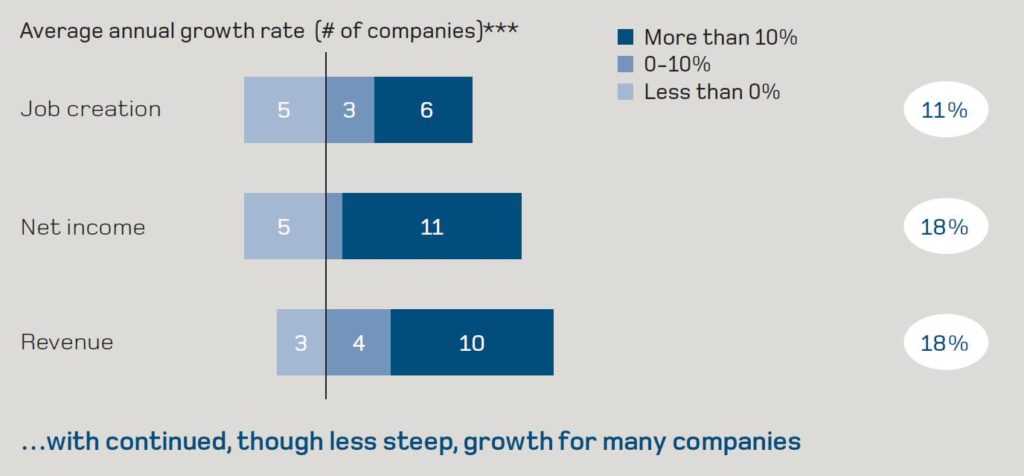
*** Post-exit dataset covers companies with available data (17 companies on net income and revenue, 14 on employment)

As Norfund enters in order to create or expand companies, this pattern is perfectly aligned with expectations and an indication that Norfund is successful in delivering on its mandate.

3. A clear relationship between healthy returns and job creation.

For Norfund to truly succeed on job creation and sustainable businesses, it is essential to achieve healthy returns.
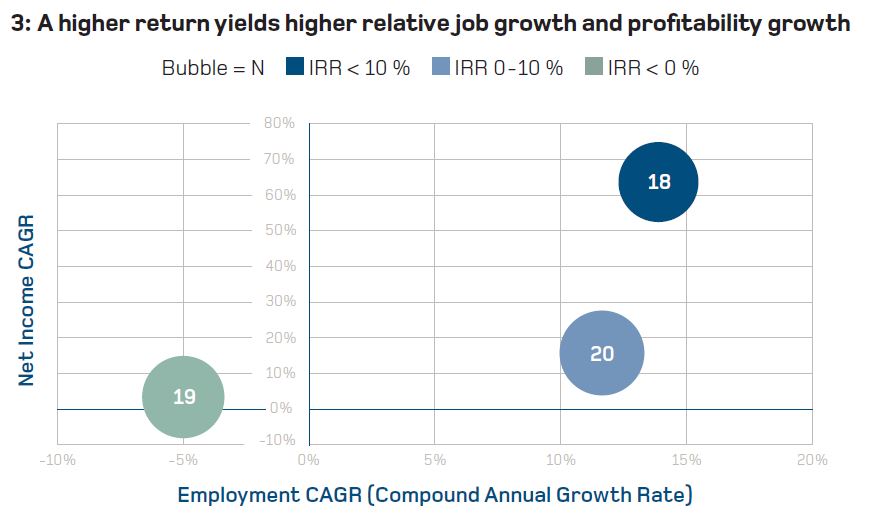
Positive IRR for Norfund is associated with higher annual growth in employment for companies during the holding period. The data indicates a positive but diminishing impact on job creation once IRR reaches a certain level.

This suggests that a sensible ambition is to achieve healthy, rather than maximum returns at the portfolio level.

Data limitations

The current analysis is undertaken primarily as a self-assessment and learning tool and has several data limitations. As such, the results are considered indicative, rather than conclusive.

There are plans to expand and improve on the dataset in the future to address these limitations and over time make findings more robust. Limitations include:
• Limited number of observations
• Data quality limitations
• Exclusion of exits to and in platforms

Building market leaders in ESG

Improving environmental, social and governance (ESG) performance of our clients is critical to Norfund’s sustainability ambitions.  Not only do high ESG standards help to mitigate risk, but they also help to identify and maximise opportunities to add value to business.

One of the ways Norfund helps firms to achieve best practice standards is through our ESG workshop programme, which provides hands-on support and practical advice.

CDC started organising these workshops in 2010, and Norfund has been a partner and provided financial support since 2017 .

Helping managers integrate ESG performance

The first years, the workshops focused on helping fund managers to integrate ESG into their investment process. However, we realised there was a lack of expertise about the role that private equity funds could play to drive good ESG performance within their portfolio companies, and that they could use their position as a leading investor to share experiences and good practice. Since then, the workshop programme has become the largest of its kind in emerging markets, reaching a significant proportion of the private equity industry in the areas where CDC and Norfund invest, particularly in Africa.

As the programme has grown, it has been adapted to meet the needs of participants and expanding the topics covered.

Learning by sharing

For example, the revised and expanded version of the programme that CDC and Norfund launched caters not only to fund managers, but also to companies where we invest directly, and those we invest in through private equity funds. The inclusion of portfolio companies has brought diverse experiences and points of view to the table, which has led to dynamic and productive discussions. The workshops use a strong ‘learning by sharing’ approach building on shared experiences and using examples from participants. Businesses often have a small ESG team of one or two people, so these sessions are an opportunity to bring a much larger group together to talk about common challenges and ways they can create value in their business. It is extremely useful for participants to see how similar challenges are addressed by other companies.  

“Strengthening the ESG capabilities of our clients enables them to improve performance and to meet Norfund’s ambitious expectations,”

Tim Lund, Senior Sustainability Advisor at Norfund

“Strengthening the ESG capabilities also makes our dialogue with companies on sustainability matters so much easier, ” Tim Lund explains.

New technical sessions focus on climate change, human resource management, emerging ESG issues such as data privacy or the circular economy, and a session on integrating impact measurement. These complement our existing training on topics such as how to integrate ESG in the investment cycle, establishing an effective Environmental and Social Management System (ESMS), board oversight of ESG and women’s economic empowerment. These sessions continue to evolve to reflect emerging practice and knowledge.

Supporting small and first-time fund managers in emerging markets

The revised workshop programme also reflects a focus on supporting smaller and first-time fund managers in emerging markets, who often face tougher ESG challenges because of contextual risks and circumstances such as weak legislative frameworks or poor enforcement of ESG legislation. These workshops aim to drive ESG value beyond compliance, by encouraging participants to think about ESG not just through the lens of risk mitigation but also through the lens of opportunity and value addition.

One example of a fund manager we’ve supported through our workshops is Ascent Capital Africa, which invests in promising businesses across East Africa through its Ascent Rift Valley Fund. The Ascent team – along with representatives from the fund’s investee companies – attended our training sessions in Kenya. One of these sessions formed the basis for how Ascent now incorporates ESG considerations into their investment process.

We really used that training to set up a template for how we look at environmental and social considerations at screening, during due diligence, and also when we’re monitoring investments

Marieke Geurts, Investment Director at Ascent.

From theory to implementation

Ascent aren’t the only Fund Manager applying lessons from our workshops; in a follow-up survey to CDCs most recent workshop, two-thirds of participants said that they planned to apply lessons from the workshops in their work within the month, and over one-third confirmed that they had already implemented changes in their company’s ESG practice as a result of the training.

Online training due to Covid-19

As a consequence of COVID-19, CDC and Norfund are now moving these workshops online, to a virtual training that keeps as much of the interactivity and implementation focused learning experience as possible.

We recently ran sessions exploring how COVID-19 affects the ESG and business integrity investment processes of fund managers. For portfolio companies, the training focused on using the ESG management system as an essential tool to navigate changing social and environmental dynamics during the pandemic.

For more informationabout our workshop programme, please contact:

Relevant articles

Emergency loans help SMEs overcome Covid-19

Banco Promerica Costa Rica, a Norfund investee, is proactively seeking a Covid-19 emergency response for its small and medium sized (SMEs) clients.

Costa Rica has been hit hard by the impact of COVID-19, as have all other countries in Central America. The Costa Rican government responded quickly by introducing strong containment measures and succeeded to flatten the curve and reduce the number of deaths.

However, these measures slowed economic progress and has resulted in a sharp contraction of the economy[1].

Banks halt SME loans

Shaken by the number of businesses that were being forced to shut down or operate at 50% due to the pandemic lockdowns, most banks in Costa Rica halted their lending to small and medium sized businesses (SMEs). Thousands of jobs are now at risk.

The Central Bank of Costa Rica states that 7000 companies have already frozen employee contracts with 118,000 people.

Banco Promerica takes a different approach

Banco Promerica Costa Rica took a different approach. The bank, a Norfund investee since 2018, aims to secure thousands of local jobs by supporting the SME-clients that operate in the hardest affected sectors (agriculture, tourism, consumer- and retail- goods and entertainment). The intention is to help them maintain their employment contracts.

Will extend loans to 300 SMEs and save over 6000 jobs

With this initiative, Banco Promerica Costa Rica was the first regional bank to approach Norfund with a well-developed proactive plan of in total USDM60 to directly support SMEs during the crisis.


As an investment manager it was particularly motivating to be able to immediately work on mobilizing capital to entities at the very start of the crisis.

Heidi achong, investment manager, norfund regional office costa rica

Heidi explains that Norfund appreciated the request, but conditioned that the bank would need to line up an additional 5/6 of their total liquidity project from other lenders – and they did!

FMO, Proparco, Blue Orchard, the IFC and others provided individual facilities. However, none of the other lenders provided tier 2 capital, so the subordinated loan from Norfund was particularly attractive because it also bolstered the capital adequacy of the bank.

With this USDM 60 facility in place, Banco Promerica Costa Rica aims to extend loans to almost 300 SMEs in highly affected sectors to cover their operational expenses for 4- 6 months . It is expected that this facility will save more than 6000 jobs.

Norfund’s contribution

Norfund has extended two facilities to Banco Promerica Costa Rica since the start of the Covid-19 crisis. The first was a USDM 3 subordinated loan to bolster the bank’s capital adequacy position given the expected increase in non-performing loans due to the economic repercussions of the crisis.  The other was a USDM7 senior unsecured loan for liquidity purposes to be used 100% for on lending to SMEs in Costa Rica to cover up to 6 months operational expenses including payroll and operational expenses.

Relevant articles:


[1] https://www.worldbank.org/en/news/press-release/2020/06/25/apoyo-del-banco-mundial-a-costa-rica-para-promover-la-recuperacion-economica-y-un-desarrollo-bajo-en-carbono

Recycling plastic bottles in Myanmar

Delta Capital’s Myanmar Opportunities Fund II, a Norfund investee, announced this month its new investment in a plastic bottles recycler company in Myanmar.

Myanmar, a country of 54 million people, consumes approximately 2 billion plastic bottles per year.

A survey on plastic pollution in Myanmar (Fauna and Flora International, 2019) reveals that 119 tons of plastic waste enter the Ayeyarwady River every day , making it one of the most polluted rivers on the planet.

With this investment, Commercial Plastics Company (CPC) will become the first food-grade bottle-to-bottle recycler in Myanmar with high operating standards.

Will recycle 20% of plastic bottles in Myanmar

The aim is to collect and recycle over 20% of the plastic bottles produced in Myanmar.

With this, the plastic pollution in the ocean will be reduced and over 15,000 metric tons of CO2 emission will be avoided per year.

The Myanmar company will invest in state-of-the art equipment and start producing top-quality food-grade recycled plastic, Polyethylene Terephthalate (PET), for domestic sales and exports.

Norfund and Myanmar Opportunities Fund II

Myanmar Opportunities Fund II is an investment fund targeting SMEs in Myanmar. Norfund has been invested in the Fund since 2018 with a commitment of 10 million USD.  

We in Norfund are excited to be part of this investment. Being established in 2016, CPC Myanmar has already become a leader in its field in Myanmar.  When visiting the company earlier this year, we met a management team that was genuinely concerned with solving this major problem in Myanmar.

Ole Kristian Sørlie, Senior Associate, Norfund

Relevant articles

Norfund sells SN Power to Scatec Solar

Norfund mobilises more than a billion dollars for new investments in developing countries.After building SN Power into a leading hydropower company in developing countries, Norfund sells all the shares to Norwegian energy developer Scatec Solar for 1,17 billion dollars.  

“The deal opens new opportunities for us to reinvest capital in projects that are crucial to fight poverty and avoid carbon emissions,” says Tellef Thorleifsson, CEO of Norfund.

Norfund (Norway’s development finance institution) has, as owner of SN Power, been instrumental in building a leading hydropower company in developing countries. Each year, SN Power plants produce power equivalent to the electricity consumption of 7 million people and help avoid 3 million tonnes of carbon emissions. 

– The team in SN Power and Norfund has done a fantastic job. Our investment in SN Power has yielded an annual return (IRR) of 19 % in NOK (12% in USD). [1]We have thus delivered profit and enabled significant social and economic development, says Thorleifsson.

The deal

With the sale of SN Power all shares and employees in the company will be incorporated into Scatec Solar. Norfund receives USD 966 million of the settlement in cash and USD 200 million as a seller credit. Completion of the transaction is subject to approvals from relevant competition authorities, partners and lenders. SN Power’s facilities in Zambia and Panama will remain owned by Norfund. The parties will collaborate on SN Power’s projects in Africa, where Norfund retains a 49% stake. The current collaboration in solar energy will also continue.  

Hydropower and solar PV are complementary, resulting in new project opportunities, for instance floating solar on hydro reservoirs. With this transaction we see great potential in broader project origination and expansion into growth markets

Raymond Carlsen, CEO of Scatec Solar 

Hydropower and solar PV are complementary, yielding new project opportunities and further portfolio optimization. We see great opportunity in access to new growth markets as well as floating solar on reservoirs in combination with hydropower, says Raymond Carlsen, CEO of Scatec Solar. 

Large scale investments crucial to address climate crisis and COVID 

Access to renewable energy is crucial for developing countries to grow out of poverty without exacerbating the climate crisis, and the World Bank has estimated a need for $ 900 billion in renewable energy investments by 2025 to meet developing countries’ energy needs. COVID-19 has also hit developing countries hard, with a slowdown in growth and rapidly rising unemployment. 

– This deal means that we can quickly reinvest our capital. Teaming up with existing and new partners, we will capture opportunities in renewable energy that we so far have had to turn down, says Thorleifsson. 

A structured international sales process 

In 2019, Norfund initiated a structured sales process of SN Power aimed at international financial and industrial players. Norfund’s board decided on 3 July to enter exclusive negotiations with Scatec Solar, and today an agreement has been signed.  

– Our goal was to land the best deal to deliver on Norfund’s mandateHere, Scatec Solar came with the best offer, and we are pleased to contribute to a Norwegian company becoming a leader in both hydro and solar power. This is a strong foundation for our continued collaboration, says Thorleifsson. 

For further information, please contact: 

  • Norfund: Per Kristian Sbertoli, Head of public relations, per.kristian@norfund.no, tel: +47 930 89 103  
  • Scatec Solar: Ingrid Aarsnes, VP Communication &IR, tel: +47 950 38 364, ingrid.aarsnes@scatecsolar.com 
  • SN Power: Elsbeth Tronstad, EVP, tel: +47 905 82 383,  elsbeth.tronstad@snpower.com 

[1]Estimated, NOK/USD rate 9,35

Avoiding 8 million tonnes CO2 emissions annually

Solar smal

A new analysis shows that Norfund’s investments in greenfield renewable energy plants avoid 8 million tonnes of CO2 emissions annually. This is equal to 1/6th of Norway’s annual emissions.

Solar smal
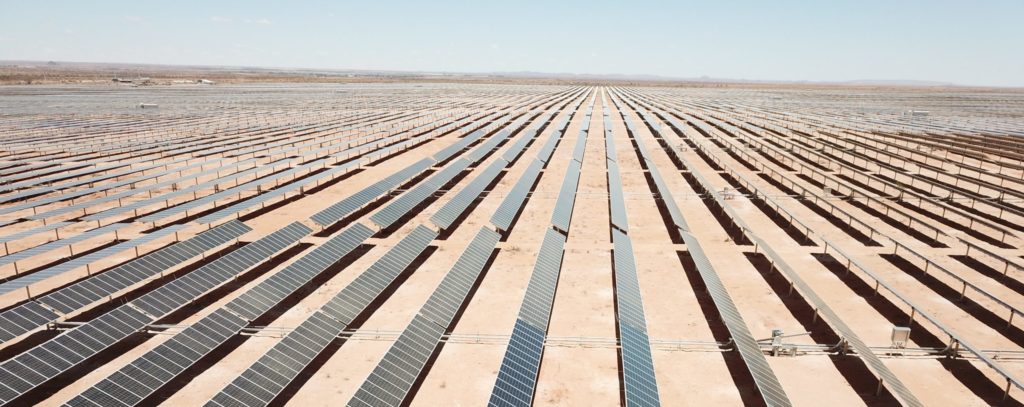
Upington South Africa

Access to reliable energy is a prerequisite for development and increasing the supply of electricity has been one of Norfund’s main impact objectives since the fund was established. However, if the energy needs are met by fossil fuels, it will be impossible to stop the climate crisis that will hurt the poorest countries the most.

At this year’s Norfund conference, focusing on climate change, a new analysis was presented that reviewed the total impacts on climate emissions supported by Norfund’s investments in Clean Energy. The results were presented by one Norwegian newspaper under the headline “Norway’s most effective climate measure is completely unknown to most people”.

Emissions avoided equal to those of all Norwegian cars and heavy vehicles

The analysis concludes that the greenfield renewable plants Norfund has supported contribute to avoiding an estimated 8 million tonnes of CO2 emissions annually. This corresponds to the emissions from all passenger cars and heavy vehicles in Norway, or 1/6th of Norway’s annual emissions.

8
mill tonnes

CO2 emissions avoided annually

Meanwhile, Norfund’s investments in renewable energy have had an average annual return since inception of 7% (IRR) in investment currency, or 12% in NOK.

It is doubtful whether any other Norwegian measure has contributed to a more cost-effective reduction in greenhouse gas emissions, Norfund’s CEO Tellef Thorleifsson, wrote in the Norwegian business newspaper Dagens Næringsliv.

Methodology used to measure the impact

The power projects Norfund has invested in have a total combined capacity of 8,700 MW and are estimated to produce 27 TWh of electricity annually. This is equivalent to the combined electricity consumption of Kenya, Tanzania, Uganda and Ethiopia. A total of 7,090 MW of the capacity financed is generated by renewable sources. Hydro projects account for the largest share of installed capacity (37%), followed by solar (23%) and wind (22%).

The analysis covers 89 power projects financed since our inception in 1997. Norfund typically participate on the equity side, but also support power projects through debt or intermediaries.

When it comes to greenhouse gas emissions, our impact is made by adding new energy from renewable sources, that replaces energy that would otherwise have be generated by fossil sources. For this analysis we thus decided to look exclusively at the greenfield investments in energy.

We have also included investments that contributed to building new renewable capacity, which we have since exited, but that are still up and running. This gives a better measurement of climate impacts, as the avoided emissions are the same, regardless of who later owns the assets, and a faster recycling of capital for new investments thus undoubtedly has a larger impact on emissions than staying on as a long-term owner of the same investments.

4,700 MW of new renewable capacity added

Norfund’s investments have since the fund was established in 1997 supported the installation of a total of 4,700 MW new renewable energy capacity. Of these, 1600 MW have been exited.

To measure the impact on emissions from these investments, we have used the methodology and default emissions factors described in GHG Accounting for Grid Connected Renewable Energy Projects, developed by the International Financial Institutions Technical Working Group on Greenhouse Gas Accounting in July 2019.

The impact analysis covers the total impacts of the power companies we have invested in. Norfund’s investment and non-financial support contribute to these results along with other inputs.

Expanding energy access in Africa

In partnership with leading investors, Norfund has made a joint commitment of US $90 million to Greenlight Planet Inc., the largest provider of solar-powered home energy products in sub-Saharan Africa and South Asia.

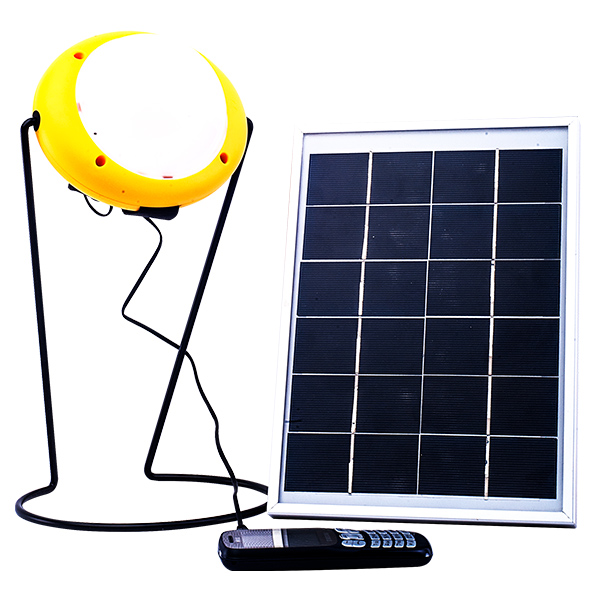
Greenlight Planet’s Sun King products offers clean, renewable and reliable energy to sixty million individuals across 65 countries. This new funding will enable Greenlight Planet to further expand its Pay-As-You-Go (PAYG) solar home systems business in Kenya, Tanzania, Uganda and Nigeria.

Bringing affordable, clean energy to those in need

To date, the company has delivered more than 1.3 million PAYG solar products in Kenya, Tanzania, Uganda, and Nigeria. And the demand is increasing – the deliveries have been expanding at a rate of over 65,000 new rooftop solar installations per month. 

Greenlight Planet’s goal is to bring affordable, clean energy to every under-electrified household that needs it. We are expanding access to consumer financing, making basic solar power available to all people, at a cost as low as $0.15 per day.

T. Patrick Walsh, co-founder and CEO of Greenlight Planet

After a decade of honing our solar technology and our solar distribution, installation, and service strategy, we are now jumping the last hurdle to solve this global challenge, that being financial inclusion, says CEO and co-founder T.Patrick Walsh.

Increased demand during Covid-19

The products – which include various essential home appliances and the solar panels and batteries to power them – are especially needed as customers spend more time at home during the COVID-19 pandemic. Sun King products have saved over US $3.4 billion on fossil-fuel-based energy costs, reducing global greenhouse gas emissions by more than 14 million metric tons.

As the company is expanding access to consumer financing, it makes basic solar power available to all people, at a cost as low as $0.15 per day. The company’s PAYG distribution network employs up to 7,000 staff across the world, 30% of whom are women employed in areas of sub-Saharan Africa, where unemployment levels are high.

The company has delivered consistent profitability over the last four years and generated its first $100 million in revenue in 2019.

Norfund’s contribution

Norfund’s $10,75 million loan will help to boost access to affordable and reliable energy to small businesses and off-grid families. This will among others contribute to increased productivity for the businesses and provide children the means to studying longer. As a result, the commitment will contribute to the United Nations’ Sustainable Development Goals Affordable and Clean Energy (SDG 7); Climate Action (13); and Decent Work and Economic Growth (SDG 8).

Increased access to electricity improves the lives of people living in rural or poor areas. As an active investor, Norfund is looking forward to supporting Greenlight Planet in bringing affordable solar energy to under-electrified households in sub-Saharan Africa

Bjørnar Baugerud, Vice President – Norfund Clean Energy

Norfund is invested in Greenlight Planet, alongside our British and Dutch sister organisations CDC group and FMO, in addition to impact investors ResponsAbility, SIMA Funds, Symbiotics, Global Partnerships, and private equity firm ARCH Emerging Markets Partners’ Africa Renewable Power Fund. Of the total $90 million in committed funding, $69 million has been disbursed to the company, with the balance to be drawn down as the company delivers additional solar-powered home energy systems, with end-consumer financing, to homes in Africa.

Other relevant articles:

Strengthening the insurance coverage in Sri Lanka

Norfund, Finnfund and MunichRe have invested in total USD 30 millon in Softlogic Life Insurance PLC.

Press release, 2nd September 2020:

Softlogic Life Insurance PLC is pleased to announce the inking of landmark deals with Development Financial Institutions; Finnfund and Norfund who signed a USD 15Mn Tier II Subordinated Debt transaction with the company on 24th August 2020 that will provide funding to further develop the business objectives of the company. The transactions are even more significant as they are being executed amidst the ongoing COVID-19 pandemic that has impacted the entire world.

A fast growing market

Softlogic Life is Sri Lanka’s third-largest life insurance entity. These milestone transactions amplify the excellent prospects available for the life insurance industry in Sri Lanka. The Company’s fast paced growth has brought a share of 16.2% of the market as at 31st March 2020, doubling market share within the past five years, covering more than a million lives. The Company in 2019 grew 25% versus an industry growth of 11% issuing 247,755 policies and selling the highest number of policies accounting for 33% of the market.

These investments by Norfund, Finnfund and MunichRe are a testament to the solid work we have put into building Softlogic Life into a formidable business in Sri Lanka’s insurance industry.

Ashok Pathirage, Chairman of Softlogic Life Insurance PLC

“We are always keen to develop our operations by utilizing international expertise and together with Leapfrog Investments who are shareholders of the Company are continuously assessing possibilities to improve our capabilities even further. We remain fully confident of Sri Lanka’s growth prospects and see the low penetration in the life insurance industry as a great opportunity for future growth. We are proud to state that during 2019 one in every three life insurance policies sold in the market was from Softlogic Life, which is a great testament to the customer segments that we cover and the extent of our product diversification, ” said Pathirage.

Norfund’s first investment in the insurance sector

The investment marks Norfund’s first investments in Sri Lanka’s insurance industry. Softlogic Life is pioneering inclusive life and health insurance solutions in Sri Lanka and has today over half million low- and mid-income customers. By offering affordable insurance to emerging customers, the company helps to increase resilience in unexpected situations.

“Norfund invests in financial institutions to strengthen their ability to contribute to increased access to capital for companies and previous unbanked people. Softlogic Life is a great fit with our objective to create jobs and improve lives by investing in businesses that drive sustainable development.”

Fay Chetna, Regional Director Asia, Norfund.

About Softlogic Life

Softlogic Life Insurance PLC is a subsidiary of Softlogic Capital PLC and is part of the Softlogic Group, which is recognised as one of Sri Lanka’s most diversified and fastest-growing conglomerates with interests in Healthcare, Retail, ICT, Leisure, Automobiles and Financial Services. Significant stakeholders in the company include global investors Leapfrog Investments.

Softlogic Life recently made it to the Forbes Asia’s ‘Best Under A Billion 2019’ list, a business ranking which spotlights Asia’s 200 top-performing listed companies with less than US$ 1 Billion in revenue with consistent top and bottom-line growth. Softlogic Life is the only company in Sri Lanka and one of the two insurance companies in the Asian region to achieve this momentous feat.

Equity Bank CEO receives the Oslo Business for Peace award

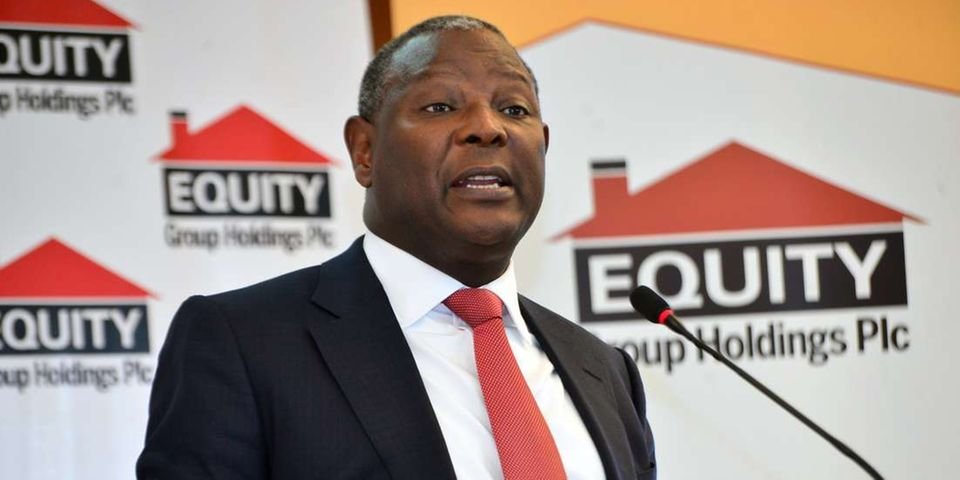
Equity Group Chief Executive Officer James Mwangi has been awarded this year’s Oslo Business for Peace Award for his efforts in enhancing financial inclusion in the region.

Dr James Mwangi is one of Africa’s most renowned entrepreneurs.

Enabling financial access to the poorest

James Mwangi started working for Equity Bank in 1993 and has since then been known for turning around the bank from a loss making entity to making it one of today’s largest banks in East and Central Africa .

He is credited with democratising financial access by giving the unbanked population opportunities for broader economic participation.

Today, Equity has become an integrated financial services group operating in 6 African countries with over 9 million customer accounts and nearly $4 billion in assets. Norfund has been invested in Equity Bank since 2008.

A scalable, technology-driven business model

The aim of Equity Bank is to transform the lives and livelihoods of people in East Africa socially and economically by providing modern and inclusive financial services. The bank is one of the few banks globally that has succeeded in developing a scalable, technology-driven business model for efficient, high quality service delivery to the mass market in a developing country.

Norfund has been invested in Equity Bank since 2008. The investment was later transferred to Arise – Norfund’s main vehicle for investments in financial institutions in Africa, established in 2016. In 2019, Norfund committed a direct loan to Equity Bank funding further growth.

Norfund congratulates James Mwangi for this well-deserved award and we appreciate our long-term partnership with Equity Bank.

Tellef Thorleifsson, CEO NOrfund

The Business for Peace award

The Business for Peace award, which has been described as Nobel Prize for Business, is conferred annually to exceptional individuals who exemplify their outstanding business worthy initiatives ethically by creating economic and societal value.

“Dr Mwangi’s ability to merge economic theory to the practical realities of village life enabled him to revolutionise the banking industry in Africa. Today, Equity is one of the most inclusive banks in the world with clients across the socio-economic spectrum including youth and women, ” states the Business for Peace press release.

Relevant articles

Strengthening the Ghanaian financial sector

Norfund has provided a loan of USD 15 million to First National Bank Ghana, to support the operations of the bank, including providing funding for small and medium-sized enterprises.

Many developing countries are suffering from the economic consequences of the COVID-19 pandemic. As a result, small and medium-sized enterprises in particular are dependent on reliable access to credit, and financial institutions play a vital role in this respect.

The loan from Norfund is part of a USD 85 million debt package syndicated by  DEG, where Finnfund and Proparco are also participating. The loans from Norfund and our partners will support the banks’ operations going forward, including providing funding for small and medium sized enterprises in Ghana.

The world at large is still dealing with the impact of the pandemic. We cannot downplay the importance of scaling up financial support that will help minimize the impact of the pandemic, particularly on SMEs. That is why we will capitalize on funding from institutions like DEG, Norfund, Finnfund and Proparco to engineer the expansion of real estate developments and ensure the sustainability of the private sector in Ghana”, said Dominic Adu, CEO of First National Bank Ghana.

First National Bank Ghana was founded in 2015 with a strong digital banking focus and has been developing successfully ever since. The bank offers the full spectrum of banking services to retail and commercial clients, and has recently acquired GHL Bank, which is a leading provider of real estate finance in Ghana.

The loan from Norfund will support First National Bank Ghana’s strategy to increase funding for the retail and commercial clients.

“We want to support the financial sector in Ghana, especially during these challenging times of the coronavirus pandemic. This loan provides additional capacity for First National Bank Ghana to provide funding for affordable housing and SMEs,” said Erik Sandersen, EVP Financial Institutions in Norfund.