Jobs created
Norfund contributes to creating jobs both directly in portfolio companies and indirectly through the companies’ value chains.
Each year, we measure the number of direct jobs in our portfolio companies, and the jobs created in them. Norfund’s portfolio companies also support job created through energy production and increased access to finance, purchases of goods and services from other enterprises, employees and suppliers’ employees spending their salaries, and taxes that finance the public sector. These indirect effects are however not measured or estimated.
Impact in 2025
new jobs created in portfolio companies*
total jobs in portfolio companies
*in companies with two consecutive years of reporting
Development rationale
Creating and sustaining jobs is vital to reduce poverty. Jobs generate household income, are a basis for taxation, provide security, and can enable knowledge and skills development. To sustain the impacts, the jobs must be in businesses that are financially viable. Investing in job creation in developing countries is catalyst for a virtuous cycle of growth, poverty reduction, and enhanced social stability. Norfund contributes to direct job creation in our portfolio companies, while inducing indirect job creation in the companies’ supply chains. Our investments also contribute to indirect job creation through access to financial services and increased energy access and supply.
Status and employment trends 2025
Global unemployment remained low at 5% in 2025, but structural challenges persist, especially in emerging markets. Youth unemployment remains high (12.6%), gender gaps are large, and many workers face informal, low-paid, and insecure jobs. Rapid labor force growth is not matched by sufficient formal job creation, leaving many underemployed or in low-productivity work. ILO estimates that the jobs gap, a broader measure of labor underutilization, is expected to increase to 408 million people, covering both 186 million unemployed individuals and 222 million discouraged workers who have stopped looking for jobs.
Slower growth, geopolitical tensions, climate pressures, and debt constraints are limiting job creation, particularly in fragile labor markets. Informality remains widespread, with 2.1 billion workers expected to be in informal employment by 2026. This is especially relevant in Sub-Saharan Africa, where informal work dominates and population growth increases the urgency of creating productive, formal jobs.
Furthermore, AI is also reshaping labor markets, and its benefits are unevenly distributed. In Sub-Saharan Africa and Southeast Asia, AI could boost productivity and create opportunities, particularly for small firms and informal workers, but limited infrastructure, skills gaps, and unequal access risk widening disparities. Targeted investment in digital infrastructure, skills, and scalable models will be key to ensuring inclusive outcomes.
Against this backdrop, Norfund’s investments play an important role in supporting businesses who sustain and create job opportunities. By investing in businesses and sectors with strong growth potential, Norfund contributes to the support of and creation of formal and decent jobs, while also seeking to strengthening productivity, inclusion, and long-term economic opportunities in underserved markets.
Promoting decent jobs
Norfund promotes job quality using the IFC Performance Standards on Environmental and Social Sustainability in our investment processes.
Results in 2025
By the end of 2025, the companies which Norfund invested in employed a record high number of 788,000 full-time equivalents (FTEs), either directly or through funds. 77% of these were permanent jobs.
The below figure shows the number of jobs directly supported through the companies Norfund has invested in from 2022 to 2025. The numbers are not directly comparable across years due to variations in the portfolio composition from new investments and exits. However, we see that since 2022 the number of direct jobs supported through our investments has increased by 53 %. Over the same period, Norfund’s committed portfolio has grown by 44 %.
Number of jobs and committed portfolio in Norfund’s portfolio 2022-2025
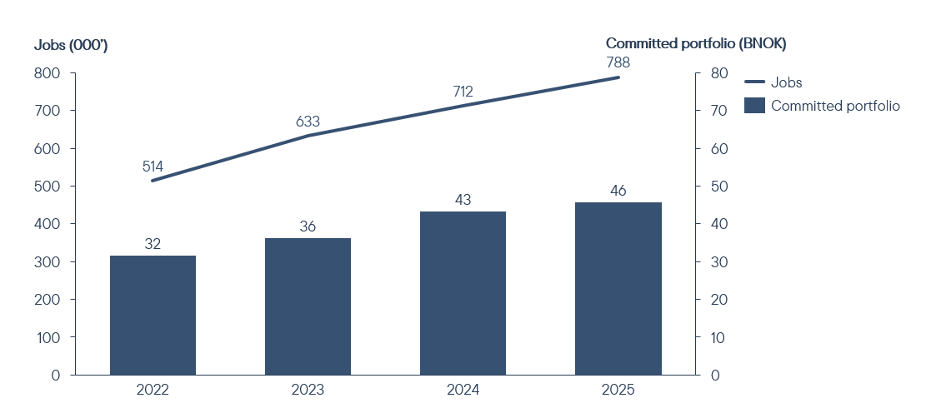
The figures reflect changes due to new investments and exits, with large sales significantly impacting total figures. As values represent full-time equivalents, actual employment is higher. All figures for development effects are not attributed to the share of investment held by Norfund. Values therefore represent total FTE jobs at portfolio companies.
Considering companies that Norfund has been invested in during two consecutive years allows for calculation of the jobs that are created. From the end of 2024 to the end of 2025, Norfund’s portfolio companies (with two consecutive years of reporting) reported a net increase of new jobs of almost 5 %, or 29,100 new jobs. The number of jobs created in a given year is also affected by the composition of the portfolio in terms of size of companies and sector distribution.
Job distribution by region
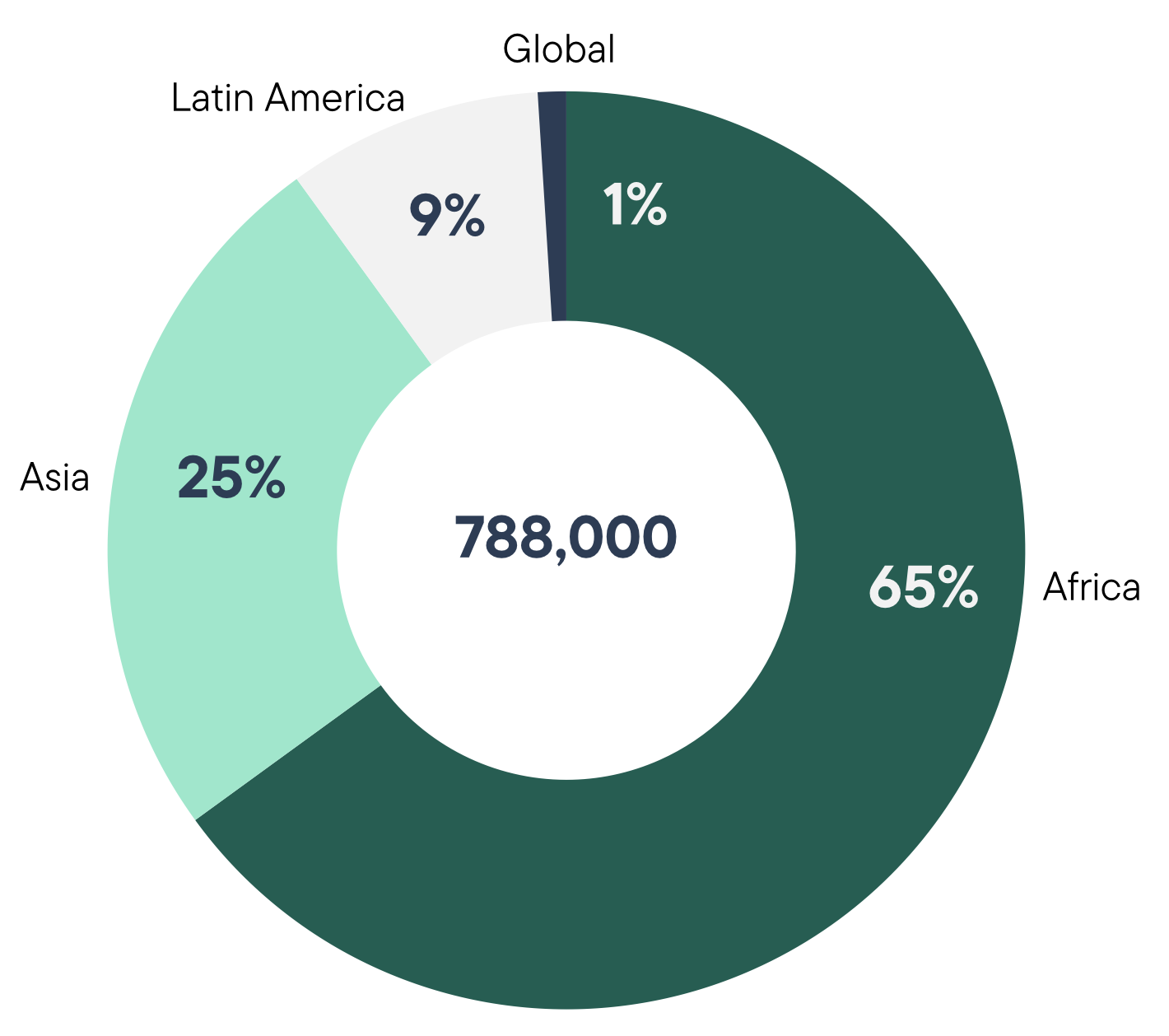
In 2025, more than 515,000 jobs were held in companies operating in Africa, making up 65 % of total employees in Norfund’s portfolio companies. 25 % were employed in companies in Asia, 9 % were employed in companies in Latin America and 1% were employed in companies operating globally.
Almost 167 000, or 21%, of the jobs were in Least Developed Countries (LDCs).
Job distribution by demographics
in portfolio companies
female employees
youth employees

 October 13, 2025
Norfund invests in sustainable steel production in Ghana
 October 10, 2025
Norfund invests in canned fruit processor in South Africa

 November 5, 2024
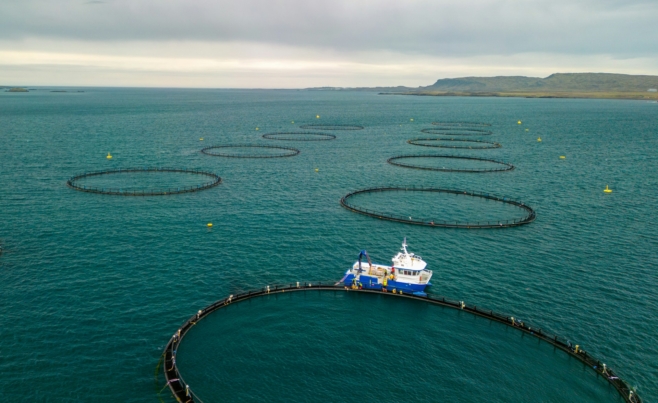
Investment in fish farming to create jobs and food security in Ghana
 September 20, 2024