New sources of revenue for avocado farmers in Tanzania
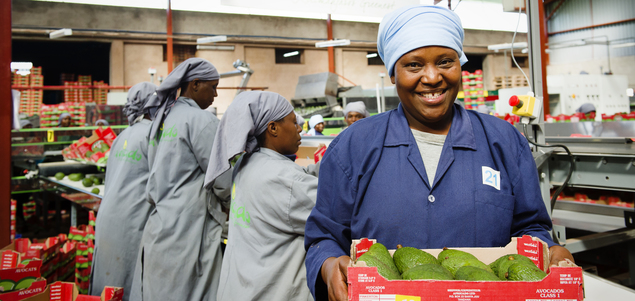
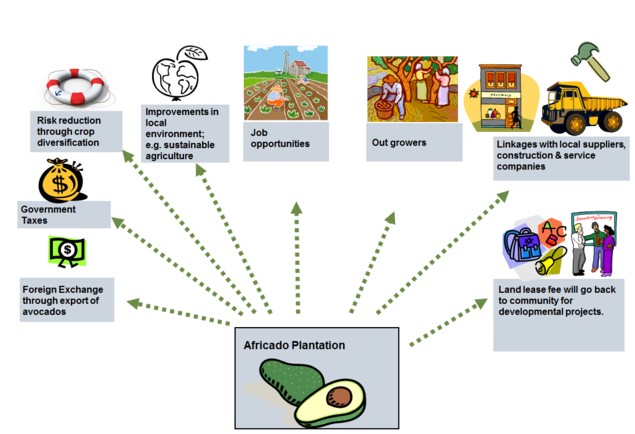
Africado is an agricultural investment that has succeeded in commercializing a traditionally low-value crop. New techniques and agricultural training are creating jobs and new sources of revenue for small-scale avocado farmers in Tanzania. Norfund’s investment enabled them to expand production and reach export markets.
Background
Established in 2007 around the Kilimanjaro area in Tanzania, Africado has developed and grown as a business from start up to becoming the largest fruit exporter in Tanzania, producing and exporting Hass avocado to the EU. The company works with over 2000 small-scale outgrowers. In 2009 Norfund committed 26 MNOK and provided 40% of the equity required for the project.
Poverty Reduction Strategy
The investment in Africado is consistent with the Government of Tanzania’s poverty reduction strategy.
Reducing vulnerability
The farm is generating important export revenues to Tanzania. Avocados were introduced as a new agricultural product that provides sales revenues in an area that previously was dominated by coffee-growing. In view of the fluctuations in the coffee prices, a broader-based industrial structure reduces the vulnerability of the farmers.
Development effects
Low cost electricity in Nigeria
For a fixed monthly fee, Starsight Power Utility Ltd offers Nigerian companies access to stable, low cost electricity. Starsight’s solution will cut the customer’s use of fossil fuels by up to 70% thanks to improved energy efficiency and the use of solar power.
Norfund and Finnfund have signed a pioneering 10 million US dollar long-term senior debt financing to Starsight Power Utility Limited group. Starsight offers solar-diesel-battery hybrid generation and efficient cooling and lighting solutions to commercial and industrial clients throughout Nigeria.
Starsight offers an innovative solution for increased access to renewable and stable energy in Nigeria. For a fixed monthly fee, the customers get access to low cost electricity and at reduce their consumption of the more expensive fossil fuels”, says Mark Davis.
With the additional funding from Norfund and Finnfund, Starsight will install its innovative solar power generation systems across a portfolio of several hundred commercial bank branches in Nigeria.
“We are pleased to partner with Norfund and Finnfund at the forefront of our bid to deliver improved energy reliability, cost savings and environmental benefits to Nigeria’s commercial and industrial power consumers”
Damilola Agbaje, Director at Starsight and Investment Principal at African Infrastructure Investment Manager
The debt financing of Starsight is one of Norfund’s first steps into the energy market in Nigeria. Starsight is backed by Helios Investment Partners and the African Infrastructure Investment Managers, the largest Africa-focused, private equity and infrastructure investment firms.
“Together, we are reimagining power provision to key employers in the Nigerian economy”
Damilola Agbaje, Director at Starsight and Investment Principal at African Infrastructure Investment Manager
Advans: strengthening microfinance access in Myanmar
Advans is a microfinance institution driven by a strong mission with focus on rural financing in Myanmar.
Background
Myanmar has a population of around 54 million whereof 70% live in rural areas. Only 26% of adults have an account at a formal financial institution (Global FINDEX Report 2017). Banks seldom lend to MSMEs and the microfinance industry is developing rapidly. The main source of financing is still through informal lenders.
Myanmar is one of Norfund’s priority countries. Norfund has been actively developing investment opportunities in Myanmar since microfinance was legalized in 2011. The Microfinance Law of 2011 boosted the expansion of microfinance services in the country, with several new local and foreign players investing in the Myanmar microfinance sector in recent years. The demand for microfinance is still large and a strong economic growth is expected in the coming years. An experienced actor such as Advans MFI Myanmar helps to positively influence the direction and development of the microfinance industry.
70
%
live in rural areas
26
%
have access to formal credit
80
%
have a smart phone
Ownership
In October 2012, Norfund and Advans – a Luxembourg domiciled investment company specializing in creating and developing microfinance institutions (MFIs) in developing countries – agreed to collaboratively develop a greenfield microfinance institution in Myanmar, Advans MFI Myanmar. Today, Advans is the majority shareholder, holding 50% of the share capital, with Norfund holding 40% and Amret – a Cambodian MFI – holding 10%.
It took longer than anticipated for Advans Myanmar to get the MFI license, but when they obtained it in April 2017, they moved fast and actually outperformed the project forecasts. Advans MFI Myanmar contributes today to increased access to finance for unbanked people and MSMEs in the country.
81
%
female borrowers
40,000
clients
55
%
rural clients
Our Impact
As Advans MFI Myanmar operates in rural and peri-urban areas far from Yangon, attracting human resources is a big challenge. Advans’ strategy to meet this challenge is to systematically train and develop their employees themselves. It thereby also contributes to developing the local financial markets and financial competence in the country.
Tomorrow, we will provide financial solutions and advice to our clients, wherever and whenever
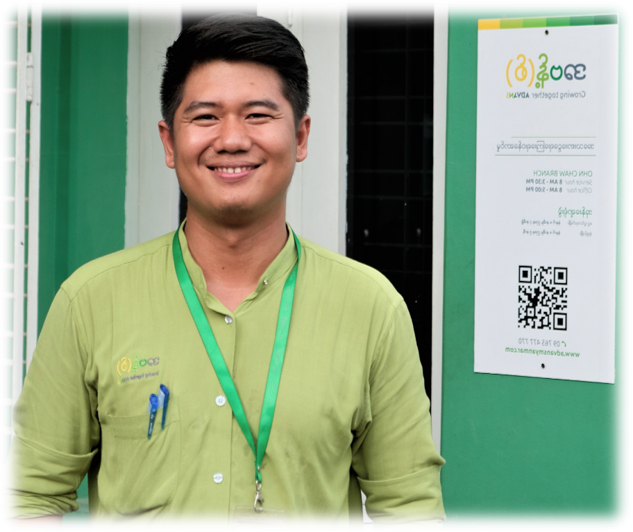
U Wai Yan Htet, Branch manager in Advans
In 2018, Norfund closed a follow-on equity investment to Advans Myanmar. This equity investment is catalytical as we expect it to help Advans Myanmar attract additional needed funding for growing its loan book.
Norfund’s first equity investment in Bangladesh
Mutual Trust Bank will promote access to long-term loans for small and medium sized companies, Green Projects (including renewable energy) and export-oriented industries.
Background
While the income growth, human development and vulnerability reduction efforts to date have been extraordinary, Bangladesh faces daunting challenges with about 24 million people still living below the poverty line (World Bank 2019).
Mutual Trust Bank (MTB) was founded in 1999 as a “third generation” private commercial bank in Bangladesh. It is listed on the Dhaka Stock Exchange (USD 185 million market capitalization as of 2020). MTB is a robustly growing Private Commercial Bank. It has a large network of 120 branches in Bangladesh and over 2000 staff. The board has a strong representation with a 35% stake.
Ownership
In May 2018, Norfund provided a first loan facility in the amount of USD 20 million for MTB. Upon receiving consent from the regulatory authorities, Mutual Trust Bank decided to raise above USD 20 m in new equity.
Today, Norfund is the largest single shareholder of MTB with 9,53% of total shares. This is Norfund’s first major equity investment in a bank in Bangladesh.
Norfund is an active owner and is represented in the Board of Directors of MTB. As an active owner, Norfund also contributes with business support to strengthen the Bank’s corporate governance.
The other shareholders are from diversified business groups with exposure to trading, manufacturing and services covering various sectors in Bangladesh.
Mutual Trust Bank appreciates that Norfund accepted the Bank as a financial partner and, contributes significantly to the overall socio-economic development of Bangladesh. The consistent hard work of the due diligence teams of both MTB and Norfund helped the Bank to provide innovative financial solutions with a view to meeting the customers’ evolving needs.
Anis Khan, previous CEO of MTB
Lake Turkana Wind Power
Lake Turkana Wind Power is the largest windfarm of its kind on the African continent. Norfund has been a patient and long-term investor since the project was initiated in 2011. The windfarm was connected to the national grid in 2018. In July 2021, Norfund sold all its shares to the Anergi Group.
Background
In Kenya, new, clean and affordable energy sources are being developed to expand power supply and to displace more expensive and polluting energy produced by fuel oil and diesel power plants. Today the Lake Turkana Wind Power Plant provides almost 17 percent of the country’s installed capacity.
17%
Lake Turkana provides 15-17% of the country’s installed capacity.
75%
of the workers employed during the construction of Lake Turkana were local residents.
Complexity
The 310 MW Lake Turkana Wind Power project (LTWP) is Kenya’s largest single private sector investment and one of the most challenging power financing in Sub-Saharan Africa. Norfund was among the first investors, supporting both the development of the project and providing equity. Constructing 365 wind turbines and a high voltage substation in an arid and remote area was challenging. In addition, more than 200 km of road was upgraded to transport equipment from Mombasa to the site. To enable the plant to be connected to the national grid, the Kenyan government built a 428 km long transmission line.
The project will increase electricity supply, reduce our reliance on thermal generated electricity and insulate Kenya from supply constraints during periods of low water level. Indeed it should be noted, that without the wind power project, the fuel cost charge would have been higher [..]. This is a combined saving to Kenyans.
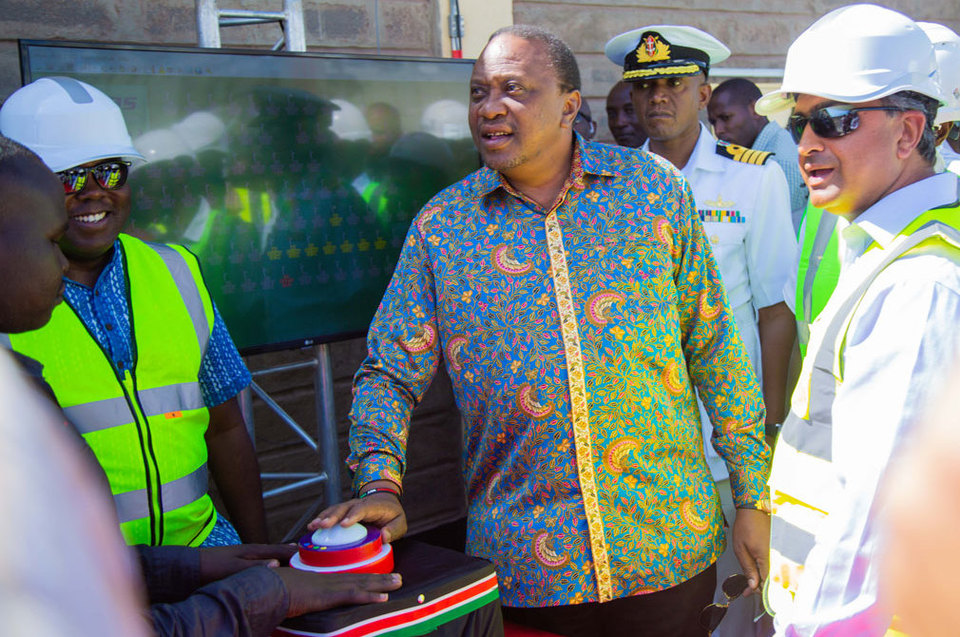
H.E. Hon. Uhuru Kenyatta 2018
Our Impact
Since becoming operational, electricity from LTWP has enabled Kenya to save costs and reduce CO2 emissions by avoiding production from fuel oil plants. In addition to providing a reliable, low-cost source of clean energy for Kenya’s population, the LTWP project provides opportunities for the local communities near the plant. The construction of the new road has had positive impacts on local communities by reducing the time and costs of transport and has helped to increased trade in the region. A number of initiatives to improve the local population’s access to drinking-water, health services and education is established. In addition, more than 2,500 people were employed during the LTWP construction period, 75 percent of whom were local residents.
The connection to the national grid was a huge milestone for this ground-breakingand transformational project. We hope the project will inspireinvestors and governments to follow suit and help realise the potential of renewable energy in Africa.
MARK DAVIS, EVP CLEAN ENERGY, Norfund
The exit
30th July 2021, Anergi Group and Norfund announced completion of a transaction whereby Anergi Turkana Investments Limited, a portfolio company of the Anergi Group, acquired an additional 12.5% shareholding in Lake Turkana Wind Power Limited from KLP Norfund Investments AS.
Anergi was the largest shareholder in Lake Turkana Wind Power and, through this transaction, they have further increased their shareholding, investment in and stewardship of Lake Turkana Wind Power.
Lake Turkana Wind Power Project Marsabit County November 2016
Norfund will as soon as possible redeploy the capital released from this investment into new sustainable and capital constrained projects in developing countries.
Female Future Program
We are supporting female talent in our portfolio companies in Uganda, Kenya and Tanzania to participate in a leadership and boardroom competence development program created by the Confederation of Norwegian Enterprise (NHO).
Female Leadership Journey, Zambia 2018
The need
In 2015, McKinsey reported that gender inequality is not only a pressing moral and social issue, but also a critical economic challenge. Advancing women’s equality could add USD 12 trillion to global growth. Even though positive changes were reported in 2019, women still face the obstacles in the first step up to management and progress toward gender equality in Africa has stalled since 2015.
Gender equality is therefore an important priority in both Norwegian and international development assistance, as illustrated in sustainable development goal number 5.
The project
The Female Future Program’s objective is to increase female participation in decision-making processes. It was developed by the Confederation of Norwegian Enterprises (NHO) in 2003 in response to the Norwegian government’s policy requiring the boards of public limited companies to have at least 40% representation of both genders. The Program was first rolled out to Uganda in 2010, then to Tanzania and Kenya. NHO trains local trainers, so over time the Program is locally owned and becomes sustainable based on the tuition fees from the participants.
As the Program is in line with SDG 5 and Norfund’s Gender Strategy to promote equal opportunities in portfolio companies, Norfund offers co-financing participation in the Female Future Program to women in leadership position in our portfolio companies.
The impact
The Female Future Program consists of 15 days of training over nine months. During this period the participants receive training on board competence, rhetoric and leadership. The central goal of the Program is to make the business environment more attractive to women, to increase the share of women in decision making processes, get business leaders to be driving force behind change and facilitate work-related and family-related responsibilities.
The Program is ranked by the International Labour Organisation (ILO) as one of the world’s 10 best programmes for advancing female leadership and board participation. By the end of 2018, 58 women received training in Tanzania, 159 in Uganda, and 198 in Kenya.
Since 2016, Norfund has supported 19 women from our portfolio companies in Tanzania, Uganda and Kenya. In 2019, Norfund supported NHO in establishing the program in Ghana.
‘Female Future has made me a better leader as a result I have seen my team grow and add value to the business we support’ – Female Future participant
Business Integrity Assessment
“Corruption undermines human development. It diverts public resources away from the provision of essential services. It increases inequality and hinders national and local economic development by distorting markets for goods and services. It corrodes rule of law and destroys public trust in governments and leaders.”
The need
Fraud and corruption are substantial global issues with enormous financial and economic costs i.e. US$1 trillion are paid in bribes per year (The World Bank Institute) and there were US$1.8 trillion in illicit financial flows from Africa between 1970 and 2008 (Global Financial Integrity, 2010).
Anti-corruption is therefore one of four cross-cutting priorities in Norwegian Development Assistance. Furthermore, target 16.5 under the Sustainable Development Goals (SDGs) is to substantially reduce corruption and bribery in all their forms by 2030. Norfund has zero-tolerance for corruption which is integrated in all levels and activities – from project assessments, internal policies and systems, investment monitoring and reporting.
The intervention
Through Business Support Norfund has supported numerous initiatives aiming at awareness and competence building and improving information systems in our investees. At the end of 2018 Norfund took this one step further and, together with Hibis AS, developed the concept of a Business Integrity Assessment as additional offer to some of Norfund’s portfolio companies.
Hibis is an advisory organization that aims to significantly raise awareness of fraud and corruption. They use innovative tools and techniques and work together with the company to identify, investigate and interpret red flags of potential malpractice at an early stage. Then they analyse the possible root causes, suggest mitigating actions and follow-up activities which contribute to the internal competence building on how to tackle these red flags. Based on a successful piloting phase in 2019, the collaboration between Hibis and Norfund will be extended in the coming years. The intention is to be able to apply Hibis’s early detection methodology to assess a few selected portfolio companies’ specific weaknesses and exposure to the risk of fraud and corruption, identify weaknesses and warning signs of improper business behavior, and suggest mitigation action based on the findings.
“The Mission of Hibis has always been effective prevention of fraud and corruption, early detection, and constructive and cost-efficient investigation when and where needed. We believe in the need to raise awareness and provide skills to recognize the fundamental difference between genuine mistake, malpractice, and fraudulent behavior. By sharing our experience and knowledge, Hibis’ role is to assist with guidance and support those people who wish to take a stand against fraud and build a strong and viable anti-corruption culture”
The impact
The pilot phase of the project together with Hibis was successfully concluded in 2019. The two portfolio companies that participated in the pilot reported that the assessment gave them clear indications on how to improve their corporate governance in practice, hereunder strengthen their business integrity and anti-corruption strategy. The approach helped the companies identify weakness and loopholes in their systems, processes and routines both internally and towards external shareholders.
The results of the pilot gave also useful feedback to Norfund’s project managers, enabling them to monitor the results with concrete follow-up activities. The aim for the coming years is therefore to increase the amount of portfolio companies undergoing the Business Integrity Assessment, and for Norfund to ensure Business Integrity remains a focus for the Business Support.
Hibis AS’s intervention will be one of several offers and tools which Norfund’s Business Support intends to develop to support its work with Business Integrity in the coming years.
Kaizen model implemented in Ethiopian farms
Empowering employees and increasing productivity through the Kaizen Model.
The need
As in many African countries, Ethiopia and Kenya are facing a youth job crisis, and will need to create millions of new jobs each year due to high population growth. Floriculture is a major employer in these geographies and growth in this sector will create jobs.
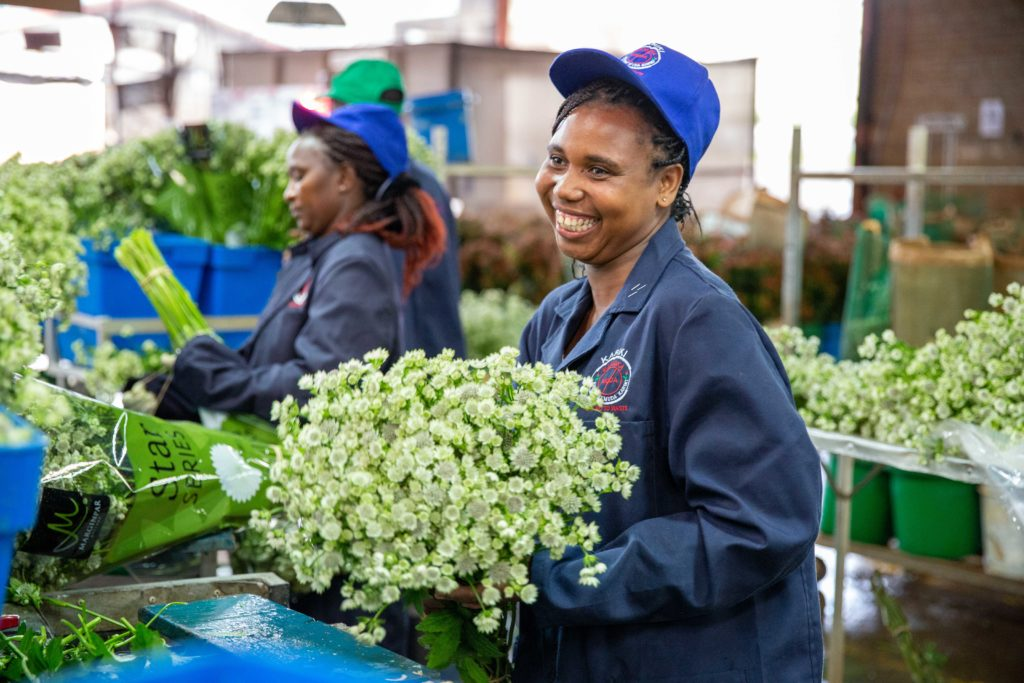
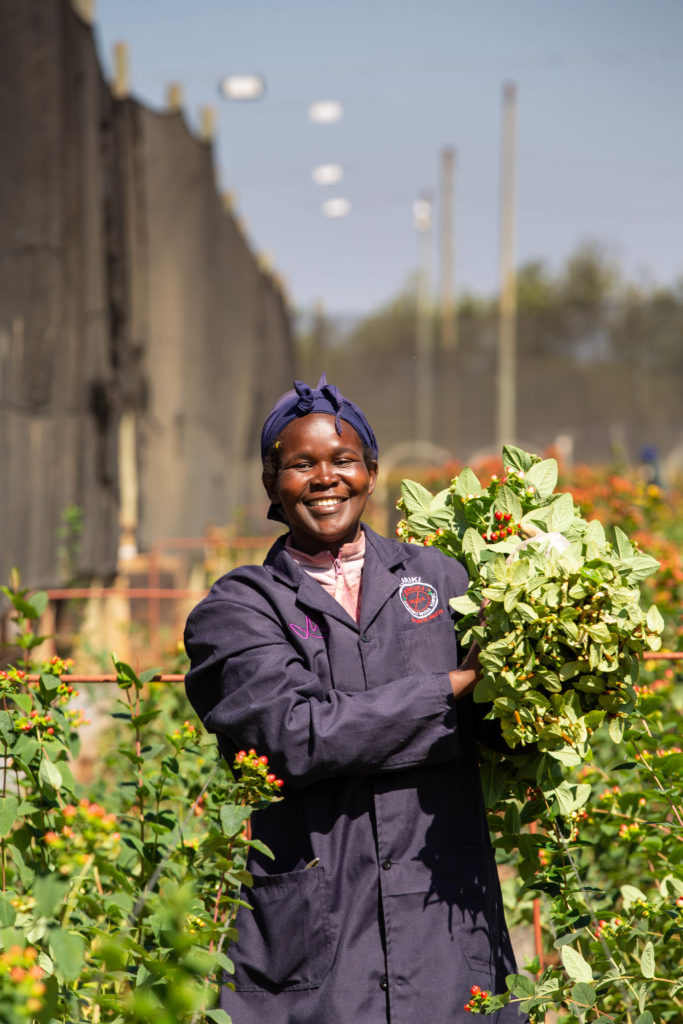
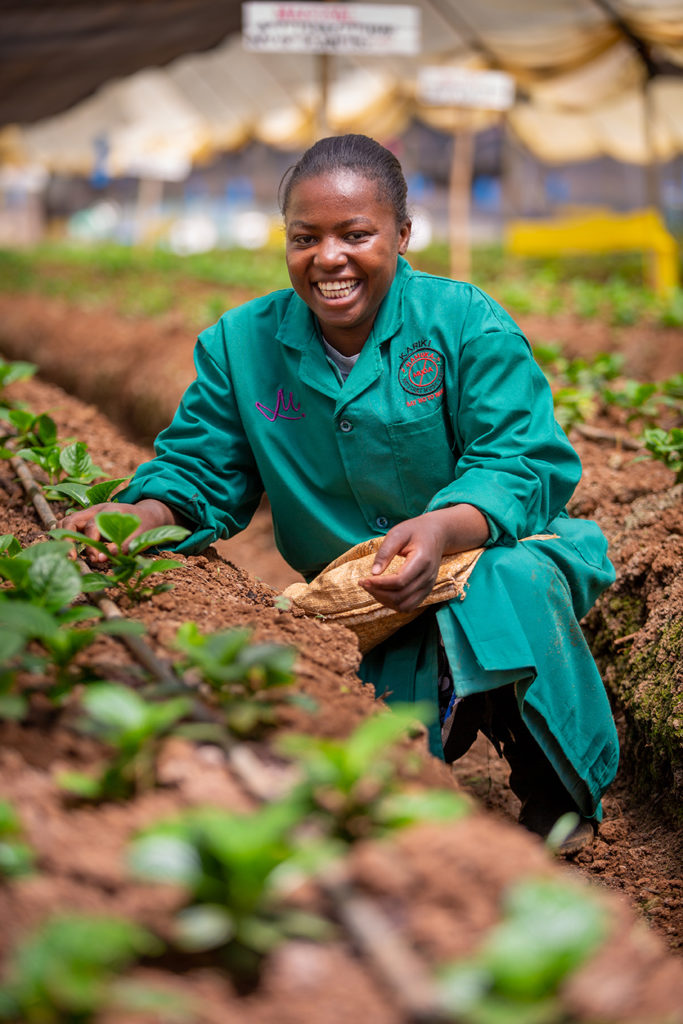
Unpredictable climate and prices make investments in the flower sector risky. In 2018, Norfund allocated USD 8.5 million in equity through the Kenyan flower producer Kariki Flowers Ltd to acquire two East African flower producing companies; Carzan Flowers in Kenya, and Marginpar in Ethiopia. Norfund’s investment in Marginpar enabled the acquisition and development of several underperforming farms in Kenya and Ethiopia.
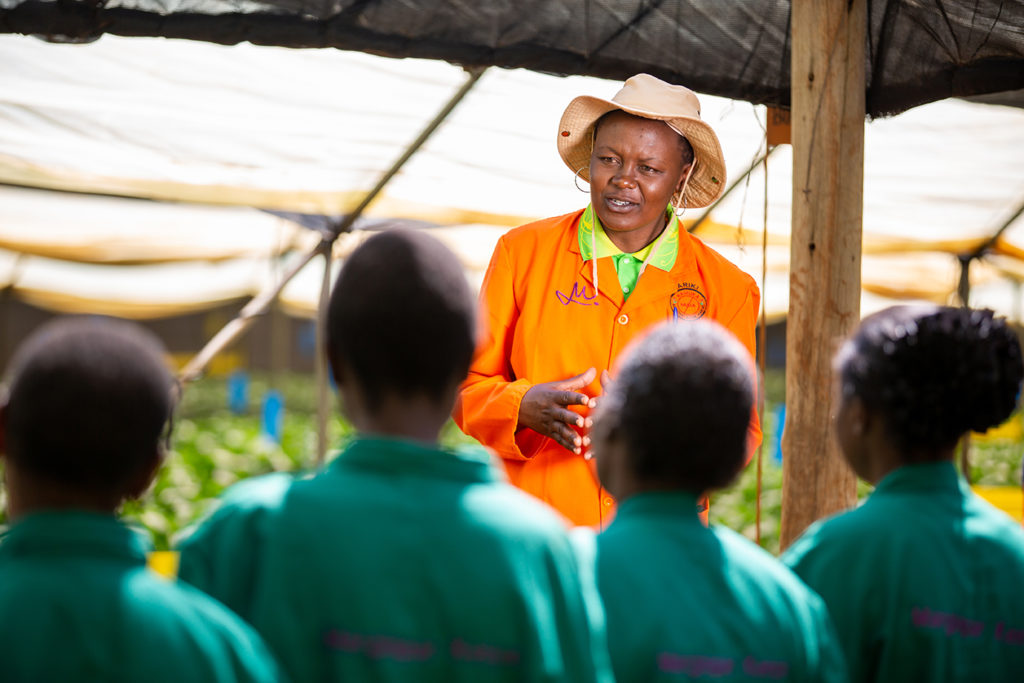
Marginpar has a strong focus on its employees and since 2012 they have introduced a Japanese management system called Kaizen to its operations in Kenya. Following the recent acquisition, streamlining and ensuring all employees in both Kenya and Ethiopia work towards the same goal has been a priority for Marginpar.
The intervention
Kaizen is a Japanese method of working to create a culture of continuous improvement in order to increase productivity. The method emphasizes active engagement of all workers, called value-adders. In the Kaizen model, employees are trusted, valued, and empowered.
Kariki was the only flower producer that practised the Kaizen method before the acquisition. After the acquisition, Marginpar has implemented Kariki´s Kaizen model at other farms in Kenya. This involves tracking productivity and sharing information with employees through visualising progress. With the successful implementation of the Kaizen model across all farms in Kenya, the farms have seen higher productivity and positive results on operations and on their employees. With co-funding from Norfund’s Business Support, Kaizen Institute will be contracted to implement the Kaizen model on the farms in Ethiopia during 2020.
The impact
We believe that implementing the Kaizen model in Ethiopia will empower and strengthen Marginpar’s employees. This will give higher productivity and better financial results for Marginpar, and better working conditions and satisfaction for their workers.
Co-funding this initiative will also give Norfund employees a better understanding of the Kaizen model, how it is implemented and the costs and benefits of implementing it. This will be important knowledge to have in Norfund’s toolbox for active ownership going forward as Norfund might see the possibility to introduce the Kaizen model to other portfolio companies.
Kaizen – continuous improvement
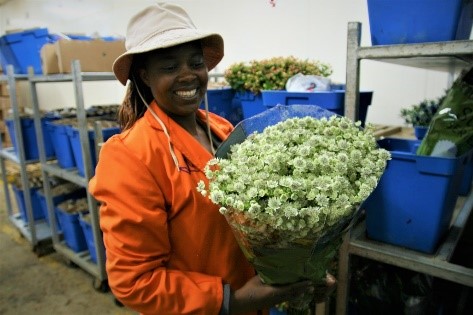
Many workers at Marginpar began their careers as non-skilled workers and have since become managers. Priscillah Muhonja, for example, started as a value-adder. She progressed from working as a harvester, to being a post-harvest manager at the pack house at the Nanyuki farm. She explains that the communication between value-adders and managers has improved significantly because of the implementation of the Kaizen system. Value-adders are encouraged to present ideas on how to improve production. They work together in small teams to improve and sustain operations.
“When there is a problem in the production, we do not ask “who”, we focus on the process and look for the root cause”
Logistic Solutions in East Africa
Efficient logistic solutions supply rural areas in East Africa with healthcare and telecommunication
Background
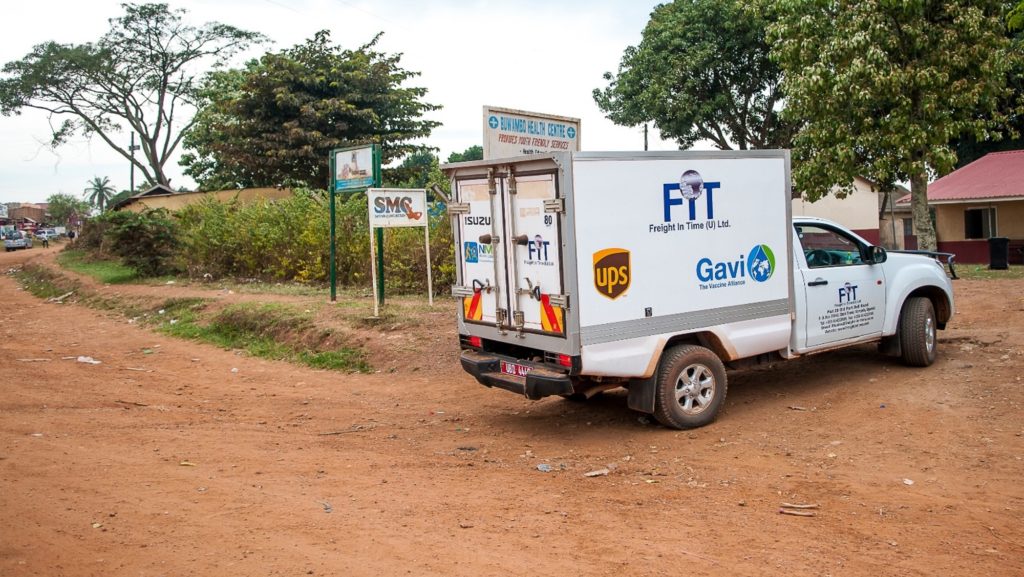
Freight in Time (FiT) is a family owned entity founded in 1965. In the last years, FiT has developed its capabilities to provide services in sea and air transport, important brokerage services, warehousing and distribution. FiT has created a large regional footprint and has an office network in 8 countries within the East African region. With Norfund’s investment of 68 MNOK in loan and equity in 2015 FiT expanded their supply chain logistics focusing on temperature-controlled warehousing and distribution for third parties, and area which is underserved in East Africa.
Valuable Partnership with Gavi
Gavi – the Vaccine Alliance, is a public-private partnership committed to saving children’s lives and protecting people’s health by increasing access to new and underused vaccines for children living in the world’s poorest countries. Gavi has developed distribution and logistics partners all over the world to distribute vaccines. In 2019, FiT was approached by Gavi to assist with the last mile delivery in some districts in Uganda to reach the underserved remote and rural poor. See film for more information.
Our Impact
It is expected that Norfund’s investment will contribute to the creation of new jobs in the East Africa region, generate tax revenues and also provide efficient logistics solutions to a number of industries including agriculture and the humanitarian sector. Norfund’s involvement will promote good corporate governance standards by transforming a family business into a professionally run company.
Creating thousands of new jobs in Nigeria
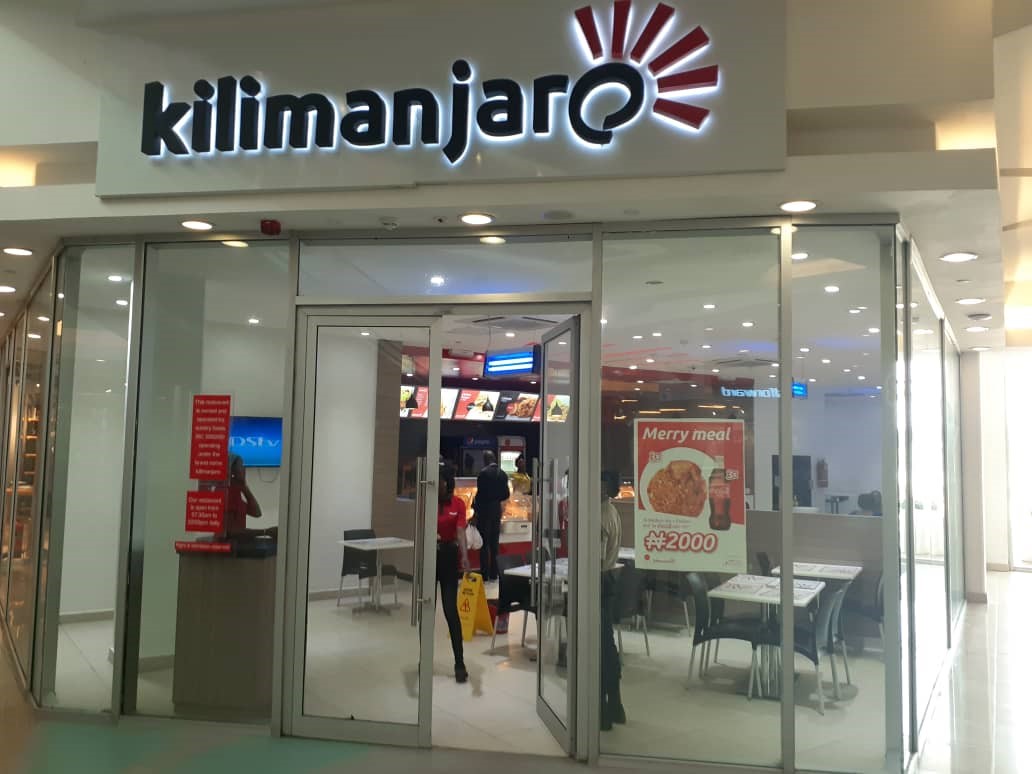
Kilimanjaro is one of Sundry Foods’ restaurant brands.
Norfund’s investment in the Nigerian company Sundry Foods Limited is an example of how investments in African Scalable Enterprises will contribute to job creation.
Creating new jobs is an absolute prerequisite for fighting poverty, reaching gender equality and adapting to climate change. The importance of creating 470 million new jobs in Africa before 2030 is on everybody’s minds these days. Not so many have the answers to how this can be achieved.
Larger companies create more jobs
Analysis from Norfund’s portfolio show that larger companies are an engine of growth and job creation. They are often more productive, recruit more staff and pay higher wages than smaller companies. Further, larger companies are more likely to be able to compete on the global stage and maintain market share in the face of foreign competitors.
In most parts of sub-Saharan Africa, there is a considerable lack of large enterprises. Based on this, Norfund aims to invest in African enterprises in the manufacturing and agribusiness sector that have clear growth potential.
Job creation in large companies makes a hell of a difference when aiming for development
Tellef Thorleifsson, CEO Norfund
Sundry Foods creates jobs in Nigeria
Sundry Foods Limited is one of Norfund’s investment companies within the Scalable Enterprise investment area. The company has experienced phenomenal growth the past few years and has close to 50 restaurants, bakeries and catering units spread across Nigeria.
Today, Sundry Foods employs about 2000 staff (approximately 1,600 at the time of Norfund’s investment in 2019). As the demand is growing, it plans further expansion. Over the next 7 years, the company will probably create another 3000 jobs.
Stephanie Keenam is the 27-year-old manager of a Kilimanjaro restaurant (trading name for Sundry Foods’ restaurants) in Abuja. She says that working in Sundry Foods has helped her connect with people on a different level and to have an optimistic view of the future.
Having a good job is important because it gives you an identity not just a name. It provides financial stability and security. It improves your confidence level when dealing with people and it provides additional perks like training, leave compensations and health cover
Stephanie Keenam, restaurant manager
Sundry Foods is one of the top Quick Service Restaurant brands in Nigeria by market share. Its restaurants serve popular Nigerian and contemporary dishes presented in a buffet style format in clean, brightly appointed restaurants. Sourcing 90 per cent of their raw material locally, their planned expansion in the form of new stores will also contribute to increased demand for agricultural goods from farmers in Nigeria.
A role model within an informal business sector
The majority of the fast food businesses in Nigeria operate in the informal market, often offering poor working conditions. Sundry Foods is different. The management team, that is purely Nigerian, aims to become a role model in regards of good governance and offering decent jobs. Founder and CEO of Sundry Foods, Ebele Enunwa believes that with Norfund as an investor, the company is better equipped to pursue the next phase of their growth story.
We will be working together to build Nigeria’s premier food company based on the highest levels of systems, food standards and business ethics.
Ebele Enunwa, Founder and CEO of Sundry Foods
Active ownership
Norfund will be an active owner and expects to add value to Sundry Foods among others by supporting its ongoing work on incorporating the IFC Performance Standards and becoming a role model on the environmental, social and governance fronts.
The investment in Sundry Foods marks one of Norfund’s first investments in Nigeria. During this journey we will contribute to creating jobs for many Nigerians and support managers, such as Stephanie, who says:
I am eager to continue developing my managerial skills and in the next five years I will be recognized as an expert in restaurant operations. I’ve noticed that one can grow from being a restaurant manager into becoming an Operations Head, and I know I have the capacity to function at such a level